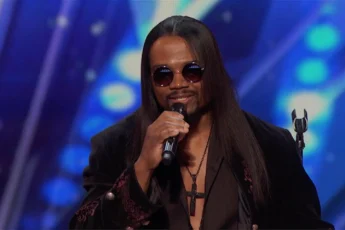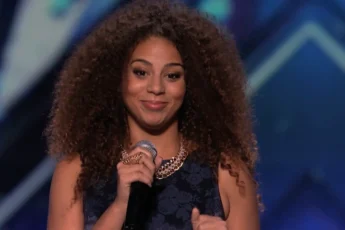
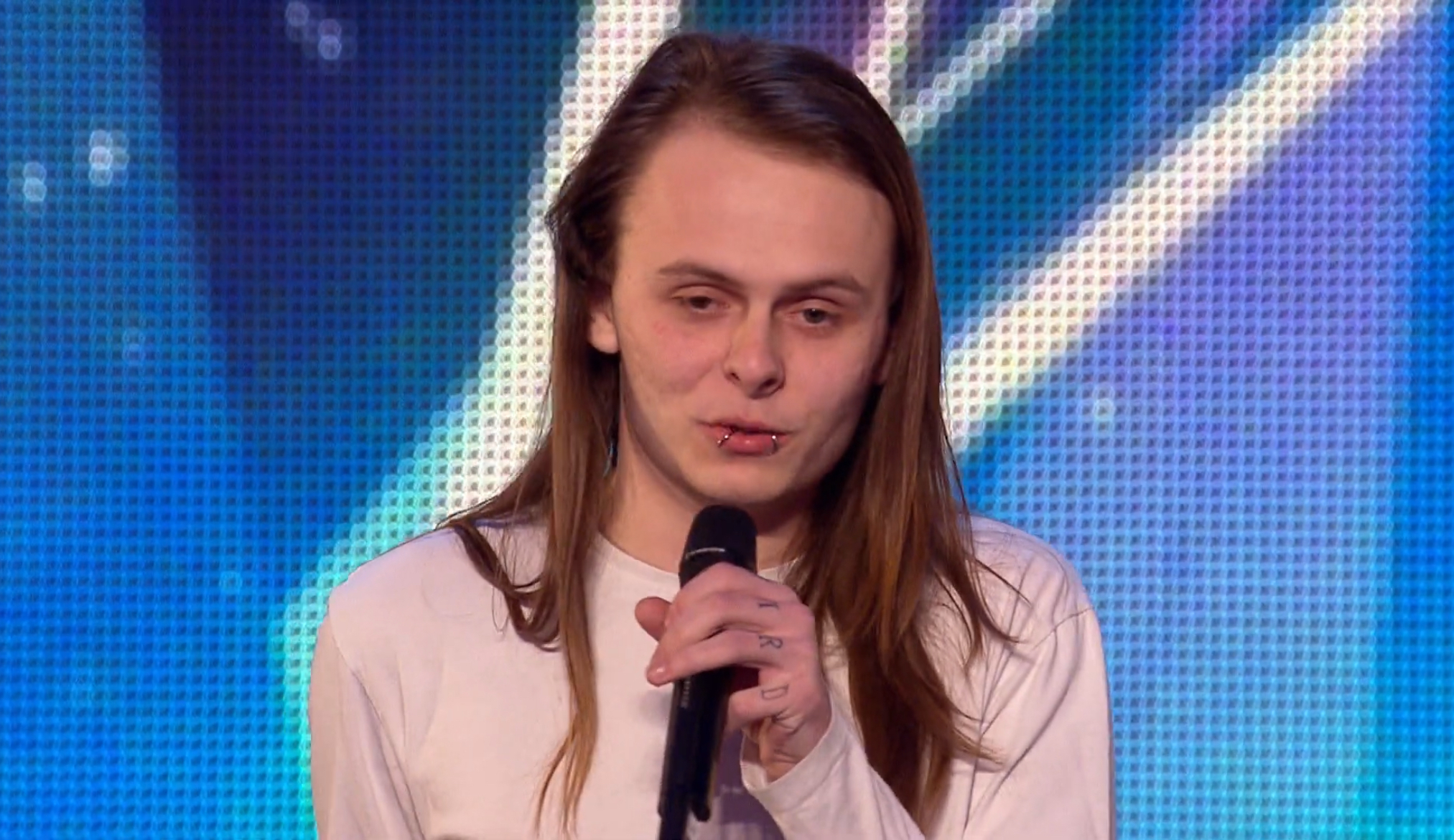
When Aaron Marshall stepped onto the Britain’s Got Talent stage and announced he was about to sing Disney’s “Let It Go,” there was an audible ripple of anticipation. The song is one of those cultural touchstones — instantly recognizable, especially to judge Amanda Holden, who visibly brightened at the opening chords. For a moment it felt like the theatre was preparing for a sentimental, melodic take on the Frozen classic: the kind of performance that elicits goosebumps and a few damp cheeks in the audience. What nobody expected, though, was how completely Marshall would reinvent the material.
As the backing track swelled and the familiar piano motif emerged, Aaron’s face remained impassive. Then, in the first line, the sound world shifted. Instead of the soaring, crystalline vocals the melody usually demands, Marshall unleashed a guttural, black-metal scream that transformed the tune into something ferocious and unrecognizable. The effect was immediate and visceral: a beloved children’s anthem recast as an onslaught of growls, harsh consonants and punishing intensity. Amanda’s initial delight evaporated into open shock; her smile tightened into an expression that mixed disbelief with genuine disgust. The red buzzer hovered above her hand for a beat, and then, without hesitation, she slammed it.
That dramatic reaction set the tone for the rest of the audition. Amanda’s buzzer was an attempt to terminate what she clearly viewed as an assault on a cherished song — an instinct born perhaps of both taste and protective sentiment toward the little girls who adore the original. But the rules of the stage gave Aaron the chance to keep going. He did so with the same unflinching commitment that had defined his opening line. His delivery didn’t soften; if anything, it intensified, with deeper growls and guttural textures layered over the track’s melodic skeleton. For listeners expecting a straightforward ballad, the juxtaposition was jarring. For others, it was oddly compelling.
The audience’s reaction evolved in real time in a way nobody had planned. Initially, there was nervous laughter and a few incredulous chuckles — the kind of reaction you get when something bizarre and unexpected happens in public. Then something stranger occurred: people began to sing the original melody under Aaron’s screams. Where his voice created abrasive, almost percussive sonic shapes, the crowd supplied the recognizable tune, their collective hum and occasional words forming a melodic undercurrent that counterpointed his harsh delivery. In several sections, audience members raised their arms in unison, swaying as if caught between two competing impulses: to join the metal catharsis and to cling to the familiar Disney refrain.
That duality — heavy metal aggression against Disney innocence — produced a surreal spectacle. It was part performance art, part musical mashup, and part public experiment in taste. Amanda, still visibly shaken, kept her displeasure front and center. Once the song finished and the panel returned to commentary, she didn’t mince words. “I found that offensive,” she declared, her voice tight with annoyance. She even went so far as to say she hoped Marshall would “lose your voice this afternoon,” an extreme wish that underscored how personally invested she felt in protecting the sanctity of the original. To her, the image of little princesses singing along to “Let It Go” was now compromised; she lamented that the audition had been “every little princesses nightmare.”
Not every judge shared Amanda’s visceral reaction. Where she heard sacrilege, Simon Cowell heard creativity and conviction. He, along with David Walliams and Alesha Dixon, gave Aaron a “Yes.” Their votes suggested a willingness to accept radical reinterpretation as a legitimate artistic choice, even if it pushed the song into uncomfortable territory for some viewers. Simon, ever the pragmatist, appeared intrigued by the audacity and the ability to provoke a strong response. David and Alesha seemed to respond to Aaron’s commitment and the crowd’s shifting energy, recognizing that provoking a reaction — good or bad — is often part of memorable television.
The split verdict left Aaron moving forward on a three-to-one majority, securing his place in the next round despite Amanda’s lone, emphatic “No.” The result highlighted a recurring tension on talent shows: where is the line between creative reinvention and disrespect? Some argued that Aaron’s version was a playful, bold subversion that showcased confidence and originality. Others, especially those who loved the original song for its emotional clarity, saw it as needlessly antagonistic. Regardless of where one stood, the audition accomplished something few acts manage: it sparked conversation, elicited strong feelings, and forced the audience to confront their own definitions of taste and performance.
Walking away from the stage, Aaron seemed unrepentant and satisfied that he had offered his authentic artistic voice, however abrasive it might be to some ears. Backstage, discussions immediately swirled about what would come next: would he refine the idea, double down on his metal persona, or pivot toward something more accessible? For Amanda Holden, the moment would remain a rare, public display of outrage; for the other judges and a significant portion of the audience, it was a bold, if polarizing, act of musical imagination. Either way, the audition proved one simple truth about variety shows: they live for moments that surprise, divide and linger in conversation long after the final note has faded.