
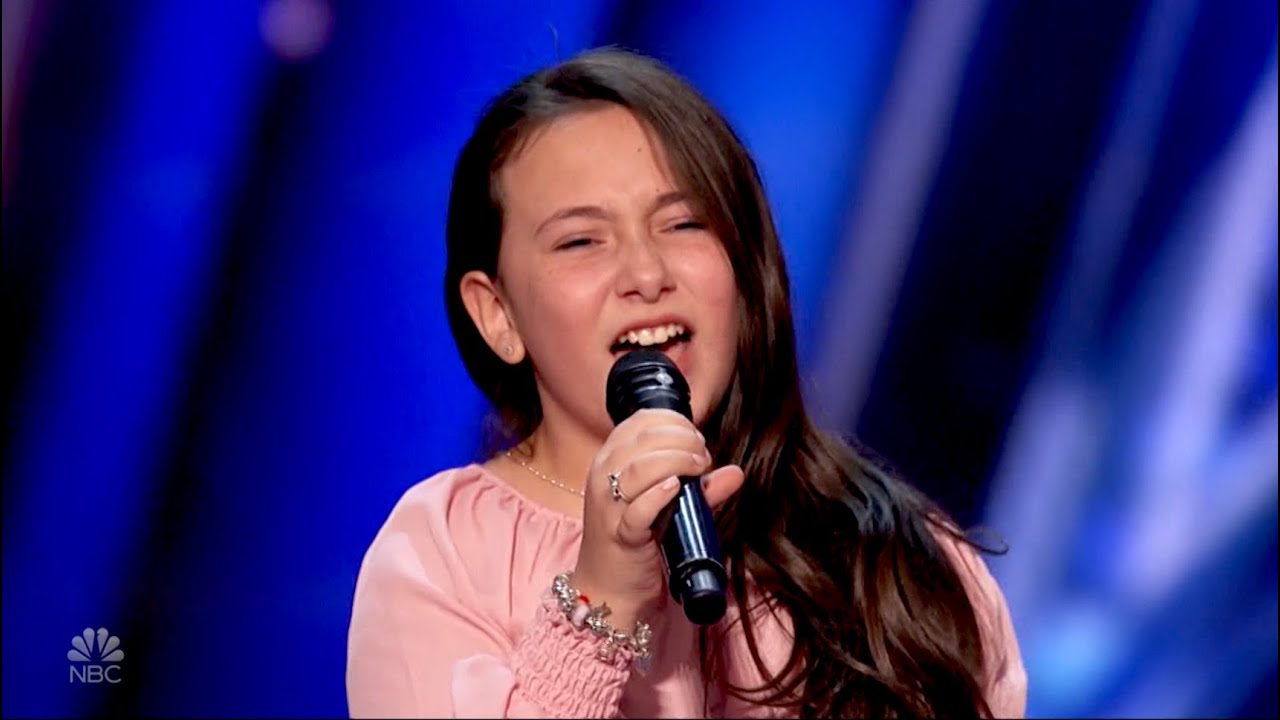
Roberta Battaglia’s audition felt like watching something quietly impossible unfold in real time. At just ten years old, she walked onto the stage with the tentative gait of a child more used to school hallways than spotlights, clutching her hands together as if seeking a familiar weight. You could see the nerves in her small shoulders and the way she looked toward her family in the crowd for reassurance. Then the first phrase of “Shallow” slipped out of her, and the room shifted as if pulled by a magnet. The tentative girl vanished, replaced by a voice so rich and controlled it made listeners question everything they thought they knew about age and artistry.
From the opening line, Roberta displayed a rare combination of technical skill and emotional clarity. Her low notes had a warmth and resonance beyond her years; her higher passages soared with an ease that suggested years of disciplined practice, not just raw talent. But what made the performance truly gripping was how she inhabited the song. She didn’t merely reproduce a well-known melody; she owned it. Tiny inflections, the way she elongated certain vowels, a gentle rasp on the tail of a note—these were choices that conveyed ownership and interpretation, the marks of an artist who understands that technique serves emotion. Audience members who had been chatting moments before fell into silence, leaning forward as if trying to catch the next breath.
Roberta’s story added an extra layer of poignancy to the performance. She spoke about being bullied at school—how peers had mocked her for being different, how a simple day of classes could be a battleground. For a child so young, speaking about those wounds took courage. When she sang, it felt less like a bid for attention and more like a quiet reclamation. Each powerful high note seemed to say, I am not defined by your taunts; each controlled soft phrase suggested an inner strength that bullying could not erase. Viewers at home and in the theatre didn’t just applaud vocal chops; they recognized the arc of resilience being played out onstage: vulnerability transformed into public triumph.
Small moments made that arc feel intimate. Between verses, Roberta would glance up and offer a shy smile, a tiny acknowledgment to the people who had believed in her. She cradled certain lines as if safeguarding them, and there was an unmistakable hush during the song’s most delicate passages—listeners holding their breath with her. The judges’ faces tracked her like a narrative, reflecting surprise, admiration, and finally, deep affection. You could tell that beyond the clip-ready moments, something human and connective was happening: a community witnessing a child take a stand with her talent.
The emotional payoff arrived when Sofia Vergara rose from her seat and slammed the Golden Buzzer. It was the kind of instant that makes live television feel sacred. Gold confetti exploded into the air, but the confetti was only a visual echo of something more significant: validation. For Roberta, the buzzer was more than a ticket to the live shows; it was a loud and public answer to the years of being doubted and derided. For viewers who had followed her story, it felt like justice—proof that kindness, talent, and perseverance can alter the course of a young life.
What’s striking about Roberta’s moment is how it combined spectacle with authenticity. Talent shows can deliver manufactured drama, yet here was a scene that felt unforced. The judges’ reactions—Sofia’s tears and decisive press of the buzzer, Simon’s widened eyes, and the tender smiles from the other panelists—felt like genuine responses to something rare. Online, clips of the audition spread rapidly, but the comments weren’t only about vocal technique; they were full of stories from people who had been bullied themselves, parents who wept seeing a child claim her dignity, and music teachers who marveled at the depth of Roberta’s interpretive gifts.
Beyond the immediate viral spike, the audition hinted at long-term promise. Roberta’s phrasing showed musical maturity; her sense of dynamics suggested an ability to tell stories through song rather than merely hit notes. That kind of foundation can be cultivated into a lifelong career, but even if she never released an album, this audition would remain a pivotal life moment: the day a community recognized her worth and opened doors she might have thought forever closed.
When the standing ovation subsided and the confetti settled, Roberta—still small among the cheers—hugged her family and let the moment wash over her. For children everywhere who have been told they don’t belong, the image of a ten-year-old stepping forward and meeting the world with a voice that silenced her bullies is both a balm and a beacon. It’s a reminder that courage can be as simple as showing up and that talent, when combined with resolve, can change not just careers but lives.