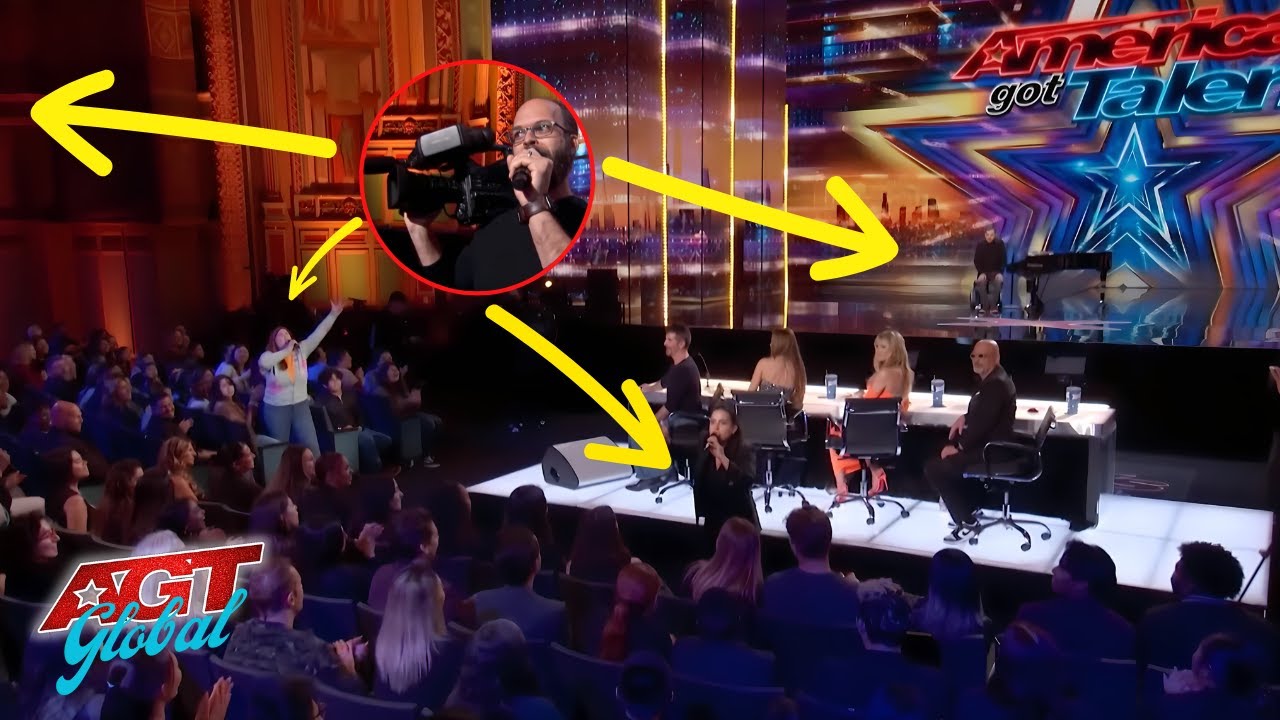
What seemed like a humble, slightly nervous audition quickly unraveled into one of the most unexpected spectacles the show had seen. Wesley, a soft-spoken man who introduced himself as a tech worker with dreams of doing music full time, sat at the piano and began a seemingly straightforward cover of ABBA’s “Take a Chance on Me.” His posture and tentative smile suggested a sincere, if unpolished, performer. At first, the song followed a familiar arc: a few tentative chords, a cautious melody line, and polite applause from the crowd. Then, in a moment that felt painfully authentic, Wesley appeared to stumble. A missed cue, an awkward pause — whatever it was felt real enough to prompt an uneasy hush to fall over the theater.
That hush is exactly what the producers — and, as it turned out, the performers — wanted. For a beat, the judges’ faces registered the same mix of concern and polite tolerance an audience gives to a shaky moment. Then the script flipped. A woman in an otherwise quiet part of the crowd suddenly stood up and began harmonizing with operatic confidence as if she’d always meant to be part of the act. A security guard, who until then had been dutifully scanning the room, produced a booming, comic vocal riff and pointed dramatically toward the stage. Even a cameraman, supposed to be invisible, left his post to belt out a cheeky interjection, his actions timed perfectly to elicit gasps and laughter. What had looked like a failed solo became the opening salvo of a full-scale flash mob.
The transition from faux-failure to full-blown production was seamless, the kind of careful choreography that gives the illusion of spontaneity. The UCLA choir — a polished ensemble used to precise arrangements — rose from the audience and swept into complex harmonies, turning the piano ballad into a joyous, multi-layered performance. At various points the group incorporated comedic beats: an exaggerated argument between two singers, over-the-top dance moves from a trio in the front row, and playful call-and-response sections that drew the judges into the action. The auditorium, which had been taut with awkwardness moments earlier, dissolved into uproarious laughter and enthusiastic standing ovations as the energy ramped up.
What made the entire sequence work was its attention to small, believable details. The “mistakes” were just clumsy enough to be believable — a flubbed lyric here, a fake cough there — but the staging ensured that every feint served a purpose. The audience’s initial discomfort made the reveal more satisfying: people felt complicit in the surprise, as though they’d been let in on a delightful secret rather than duped. For viewers at home, the shock of the switch amplified the entertainment value; clips of the reveal spread across social platforms almost instantly, with fans applauding the creativity and the sheer audacity of pulling off something so complex on live television.
Yet even amid the applause, the judges’ reactions revealed an interesting division about what makes for a sustainable act. Simon Cowell, who has long praised originality and showmanship, lauded the cleverness and theatrical bravery of staging such a stunt. Heidi Klum echoed that sentiment, admitting she loved the surprise and the way the routine turned standard expectations on their head. In contrast, Howie Mandel and Sofia Vergara raised more practical concerns. Howie argued that while the production worked as a one-off spectacle, it lacked the repeatable core — the consistent star quality — necessary for a touring act or long-term competition contender. Sofia worried that the novelty might wear thin if the group couldn’t showcase the same level of vocal and emotional engagement without the hidden setup.
Those reservations didn’t diminish the immediate thrill, however. Improv Everywhere’s trademark blend of comedy and surprise had recontextualized the audition format, and the UCLA choir’s disciplined musicality gave the stunt legitimacy. The performance posed a playful question to the show’s format: when does an audition become theater, and should that matter? For an audience primed for authenticity, the act was both an entertaining trick and a reminder of live television’s capacity for spontaneous joy.
Beyond the debate over competitive viability, the flash mob tapped into a deeper pleasure: the joy of collective surprise. Watching strangers in the crowd become performers transformed the theater into a temporary community bound by one ecstatic moment. Whether viewers thought the act belonged on a talent competition or would flourish better as a viral sketch, they agreed on one point — the performance was unforgettable. For that brief, orchestrated minute, the show stopped being a litany of individual bids for stardom and became a shared celebration, a reminder that sometimes the best moments on television are the ones that catch us entirely off guard.