
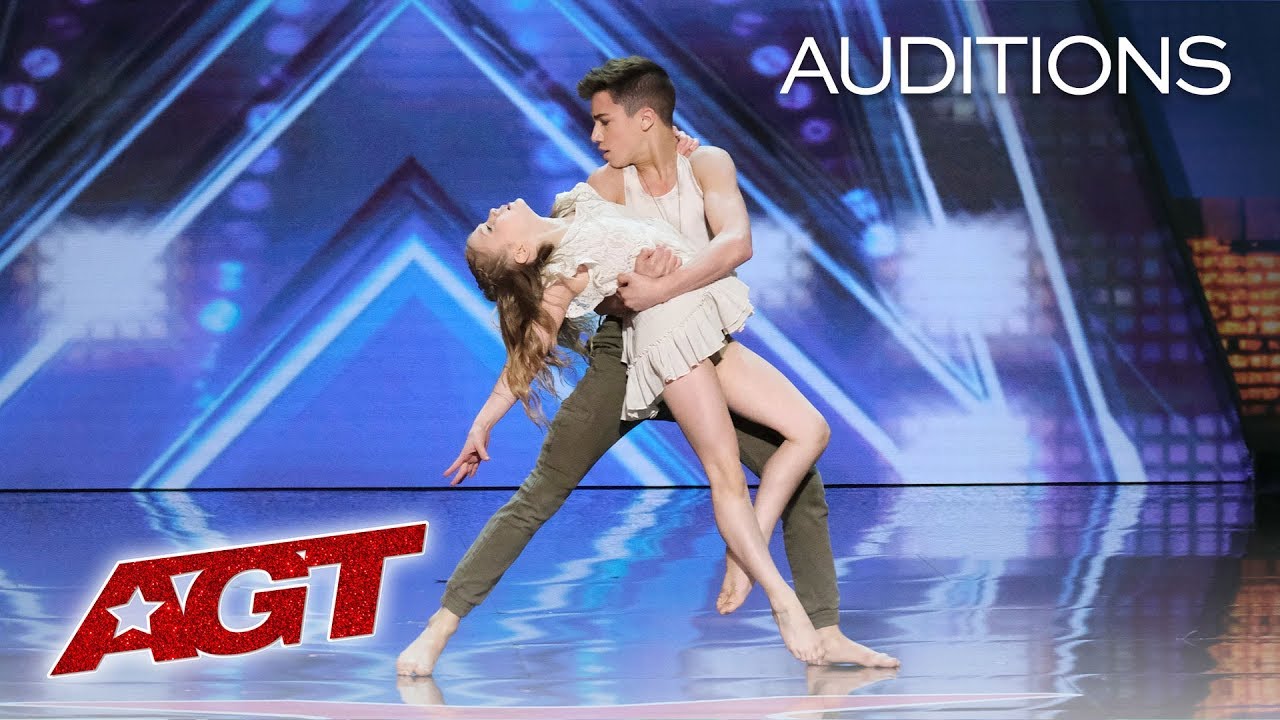
The contemporary dancers from Las Vegas, Izzy and Easton, delivered a performance that felt both polished and deeply human — a rare combination, especially coming from such young performers. From the first soft chord of the music, you could tell this was more than a recital routine; it was a carefully crafted story told through movement. They moved with a maturity that made the audience forget their ages, drawing everyone into a moment that was at once fragile and powerful.
What struck me most was the seamless partnership between them. Contemporary dance thrives on trust and responsiveness, and Izzy and Easton showed both in abundance. There were lifts that required precise timing: Izzy rising like a single breath above Easton’s steady base, her arms sculpting the air as if testing it, and Easton adjusting minutely to catch her balance. Those lifts never felt showy for their own sake; each one emerged from the emotional logic of the piece, a visual punctuation to a phrase of music. In one striking passage, Izzy seemed to disintegrate into a series of tiny, controlled collapses, and Easton’s hands hovered, then steadied her — a gesture that spoke of comfort and resilience without a single word.
The choreography itself balanced moments of intimacy with broader, sweeping gestures. Close-up sequences featured micro-movements: a fingertip brushing a shoulder, a shared glance that lingered an extra beat, small collapses and recoveries that conveyed vulnerability. In contrast, when the music opened up, so did their bodies. They used the stage fully, traveling in arcs and long, suspended poses that made time feel elastic. At times they moved as if pulled by the same invisible string, matching each other’s rhythm and breath so closely that the pair felt like a single organism with two hearts.
Musicality was another highlight. The piece chose a score that layered piano with ambient textures, giving the dancers room to play with silence and sound. Izzy had a knack for hitting the offbeat, leaning into a rest in the music and then exploding into motion. Easton responded with grounded, anchored movements, his footwork precise and sure. The music’s dynamics — its swells and retreats — were mirrored in their bodies. When the sound softened, they narrowed their focus to small, internal gestures; when it crescendoed, they expanded outward, filling the house with bold, athletic lines.
Costuming and staging amplified the emotional currents without ever stealing attention. Simple, neutral-toned outfits allowed the movement to read cleanly from the back row: a fitted top and flowing skirt for Izzy, and a slim, sleeveless shirt and tapered pants for Easton. The fabric choices mattered — the skirt caught the air during spins, creating a visual echo of the motion, while the tapered pants highlighted Easton’s quick footwork. Lighting played a subtle but crucial role, too: pools of warm light isolated moments of tenderness, while cooler washes underscored sections of uncertainty or tension. A single spotlight during a quiet duet made the theater hush; it was as if someone had whispered to the audience to lean in.
Their performance also showcased impressive technical foundations. Both dancers demonstrated strong center work and balance, which allowed them to execute demanding transitions that might fluster less confident performers. There were unexpected shifts from classical lines into grounded, contemporary floor work — a tumble into a roll that morphed into a languid reach across the stage — executed with both control and expressiveness. These moments were reminders that contemporary dance is not just about looking pretty; it’s a vehicle for complex storytelling through weight, breath, and impulse.
Emotionally, the piece resonated because it was honest rather than forced. Rather than ramming a single, blunt message down the audience’s throat, Izzy and Easton presented a spectrum of feelings: tentative curiosity, the warmth of companionship, the sting of separation, and the tentative hope that follows. You could see it in Izzy’s face during those quieter spots — a soft furrowing of the brow, a slight parting of the lips — and in Easton’s steadier demeanor, the kind that supports without overshadowing. Their chemistry felt earned, the result of rehearsals that taught them not only steps but also how to listen and respond.
Audience reaction proved telling: there were audible exhalations at certain moments, soft laughter during playful interludes, and a hush that spread across the house during the more vulnerable passages. When the final chord faded, the applause that followed was immediate and wholehearted. Not because the piece was flashy, but because it had connected — a shared experience of watching two young artists give themselves fully to a story.
Beyond that single evening, what lingers is the sense of promise. Izzy and Easton aren’t just talented kids; they’re young dancers who understand the art form’s subtleties and are already capable of translating feeling into motion. They showed technical skill, sure, but more importantly, they demonstrated an ability to communicate. That combination — craft plus heart — is what makes a performance memorable. For anyone who was there, the impression is clear: Las Vegas has some serious young talent, and these two are ones to watch as they grow into even more nuanced, compelling artists.