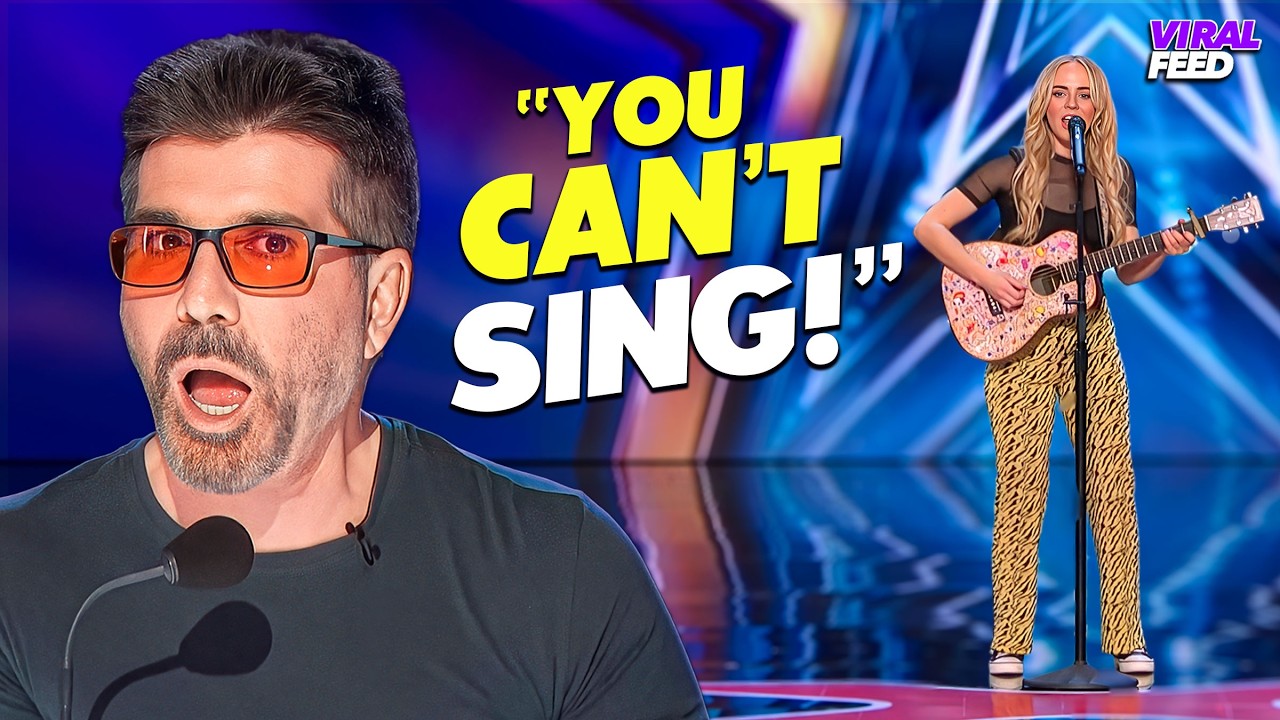
Madilyn Bailey didn’t walk onto the America’s Got Talent stage as an unknown. Long before the bright lights and the red curtain, she’d built a loyal following on YouTube — millions of subscribers who came for her voice, her covers, and the authenticity she brought to every upload. But with that visibility came something predictable and ugly: trolls. The same comment sections that held fan praise were also crowded with cruel, sometimes absurd jabs. Instead of letting those barbs erode her confidence, Madilyn decided to do something surprising. She took the comments that were meant to hurt and turned them into art.
She explained her idea to the AGT audience with a calmness that made the concept land the way she intended. Posting music online, she said, inevitably invites criticism; it comes with the territory. Rather than spending time arguing with anonymous strangers or letting their words linger, she took a different route — she used her songwriting skills to “flip the script.” She sifted through the meanest lines and rewired them into lyrics, building a pop song out of the very phrases meant to destroy her. The image of someone laboring over melody and harmony, not to romanticize heartbreak but to subvert cruelty, felt both clever and defiant.
What made her approach so compelling were the lines she chose: unexpectedly funny, disarmingly blunt, and oddly singable. A throwaway hit at the top of a comments thread — “my mom thinks you just got killed by a cat” — became a bizarre but unforgettable hook. Another scathing remark, “am I the only one who really hates her?” was repurposed into a chorus that sounded more like a taunt than a lament. It was the juxtaposition of hurtful intent with playful musicality that made the concept land. These weren’t abstract sentences on a screen anymore; they were rhythms and cadences, given life by her voice and the arrangement around her.
When the music started, the audience’s reaction traced the arc of the whole idea. At first, people laughed — partly at the absurdity of the lyrics, partly because it was strange to hear insults performed with such polish. But the laughter soon shifted. As Madilyn moved through the verses with steady control, the humor became admiration. The tune was catchy; the performance, confident. You could almost see the audience recalibrating their response from mockery to respect. That transition is the moment the strategy paid off: the crowd stopped treating the comments as ammunition and started seeing them as a creative tool. And because Madilyn sang each line with a wink rather than a wound, the sentiment behind the words changed, too.
Simon Cowell, famous for delivering unvarnished opinions, had the kind of reaction that speaks volumes. At first he watched with the same skeptical intensity he brings to every act, but as the performance unfolded, a reluctant smile spread across his face. It wasn’t just that the song was clever; it was that Madilyn had taken control of the narrative in front of millions. By the final note, she had earned not only a standing ovation from the audience but also four emphatic “Yes” votes from the judges. That moment crystallized something simple and powerful: the insults weren’t the end of her story, they were a new beginning.
The audition didn’t stay confined to that stage. Within hours it was all over the internet, clips and articles multiplying as quickly as comments on her original videos. Viewers loved the meta-narrative — a singer who used the very language of online cruelty to create something witty and memorable. People shared the audition not just because the idea was novel, but because it felt cathartic. In a culture where social media can so easily amplify negativity, Madilyn’s performance offered a subtle, musical way to respond: acknowledge the criticism, take the sting out of it, and make it part of the art.
It wasn’t a one-off stunt, either. The viral reaction gave her the impetus to expand the concept into a fuller project: a collection of songs inspired by internet trolls. There’s something refreshingly honest about that decision. Rather than hiding from the pain of negative comments or pretending they don’t exist, she used them as raw material. The outcome was music that was cheeky and relatable, songs that invited listeners to laugh at the ridiculousness of online hate instead of being defeated by it.
Madilyn’s audition came across as more than just a clever trick; it was a lesson. She demonstrated how creativity can be used to reclaim power, how vulnerability can coexist with humor, and how an artist can convert attack into opportunity without losing their voice. For anyone who’s ever felt small because of what strangers said online, her performance was a reminder: you can choose how those words define you. Madilyn chose melody and confidence — and in doing so, she turned hate into a hit.