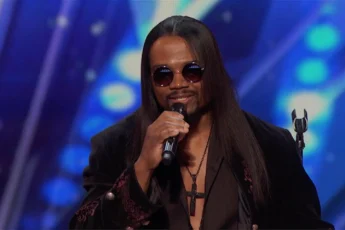
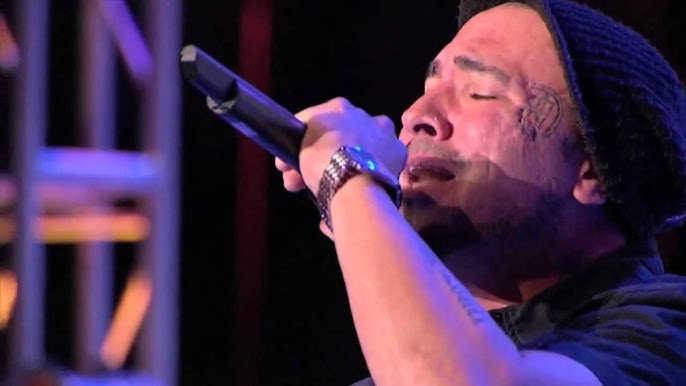
When Vino Alan first walked onto The X Factor USA stage, it was impossible not to notice him — not because of any performative swagger, but because his appearance told a story before he ever sang a single note. Tattoos traced along his arms and neck, a rugged haircut framed a weathered face, and his clothes had the comfortable, lived-in look of someone who values authenticity over polish. For a moment, you could feel the room making assumptions: the kind of quick judgments we all make when confronted with an unconventional look. But those expectations evaporated the instant Vino opened his mouth. What followed was a reminder that people are rarely what they seem at a glance.
The first line of his song landed like a small revelation. There was a texture to his voice — a gravelly warmth that hinted at hard miles walked and nights spent thinking through life’s complications. It was soulful, yes, but not in a way that felt rehearsed. Instead, the emotion felt earned. Judges who might have been ready with skeptical nods paused mid-reaction. The audience, too, went from curious to captivated. Watching Vino sing was like watching someone translate a life into sound: the subtle catch in his breath on a particular phrase suggested personal history; the way he softened his tone at the end of a verse suggested a tenderness reserved for close things. It was clear this was more than a performance; it was an offering.
Small moments in his audition made the story tangible. At one point he glanced toward the wings of the stage, as if acknowledging unseen people who had shaped his path. Later, when he wiped a bead of sweat from his brow, it felt less like a theatrical display and more like the honest physicality of someone giving everything they had in that brief window. He didn’t rely on vocal acrobatics to win over the room — though he had the range and technical skill to do so — but instead used dynamics and phrasing to build an emotional arc. The chorus grew with a controlled intensity, then retreated into softer, intimate verses that drew listeners in closer. That kind of control is rare and revealing; it shows not just raw ability but a deep understanding of how to tell a story with music.
Beyond the immediate power of his voice, Vino’s backstory amplified the resonance of the moment. He is a father, and that identity seemed to shape everything about the way he carried himself. Parenthood, with its simultaneous simplicity and enormity, had clearly informed his priorities and his art. Vino carried the sort of quiet resilience you see in people who have had to balance responsibility with aspiration. He had likely navigated judgment — from strangers who see tattoos and assume a life of trouble, or from well-meaning people offering advice on how to conform. Yet instead of sidestepping those expectations, he used them as contrast, demonstrating that tenderness and toughness can live in the same person.
Viewers who saw the clip online responded not just to the singing but to the humanity in it. Comments poured in from people who felt seen by his performance: fathers who recognized the sacrifices of late-night work shifts to provide for their children, single parents who felt the pressure of holding a household together while still feeding a personal dream, and anyone who’s been dismissed based on their appearance. The audition became a small cultural moment, a reminder that personal narratives — the kind built in grocery store lanes, bedside conversations, and long drives home — have a way of pushing through the sheen of reality television when they’re honest and unvarnished.
What made Vino’s audition endure was how it combined technical skill with lived truth. Too often, talent shows present either polished performers with big production values or raw acts that lack the refinement to carry a moment. Vino straddled that line: his singing was polished enough to impress professionals, but his delivery retained a grit and vulnerability that made the performance feel immediate and real. The judges’ reactions illustrated that mix — surprise, admiration, and something like relief, as if the show had uncovered a gem in a rough setting.
There’s also something quietly hopeful about seeing someone like Vino get that kind of platform. When a person who looks like him — tattooed, fatherly, unafraid to show lines on his face — steps into the spotlight and is celebrated for his talent and heart, it subtly widens the cultural imagination of who belongs on stages and in stories. It sends a signal to kids and adults alike that identity is not a cage; it’s material from which complex, beautiful art can be made.
In the end, Vino Alan’s audition wasn’t just about a single awe-inspiring vocal moment. It was about the collision of appearance and expectation, of lived experience and expression, and the way music can translate inner life into something universally felt. His performance silenced the judges not simply because of the power in his voice, but because it revealed a person whose art was inseparable from his life. That kind of authenticity — equal parts grit and grace — is what makes performances like his linger in the memory, and why so many viewers kept returning to the clip, returning to the feeling that sometimes, the most surprising voices are the truest.