
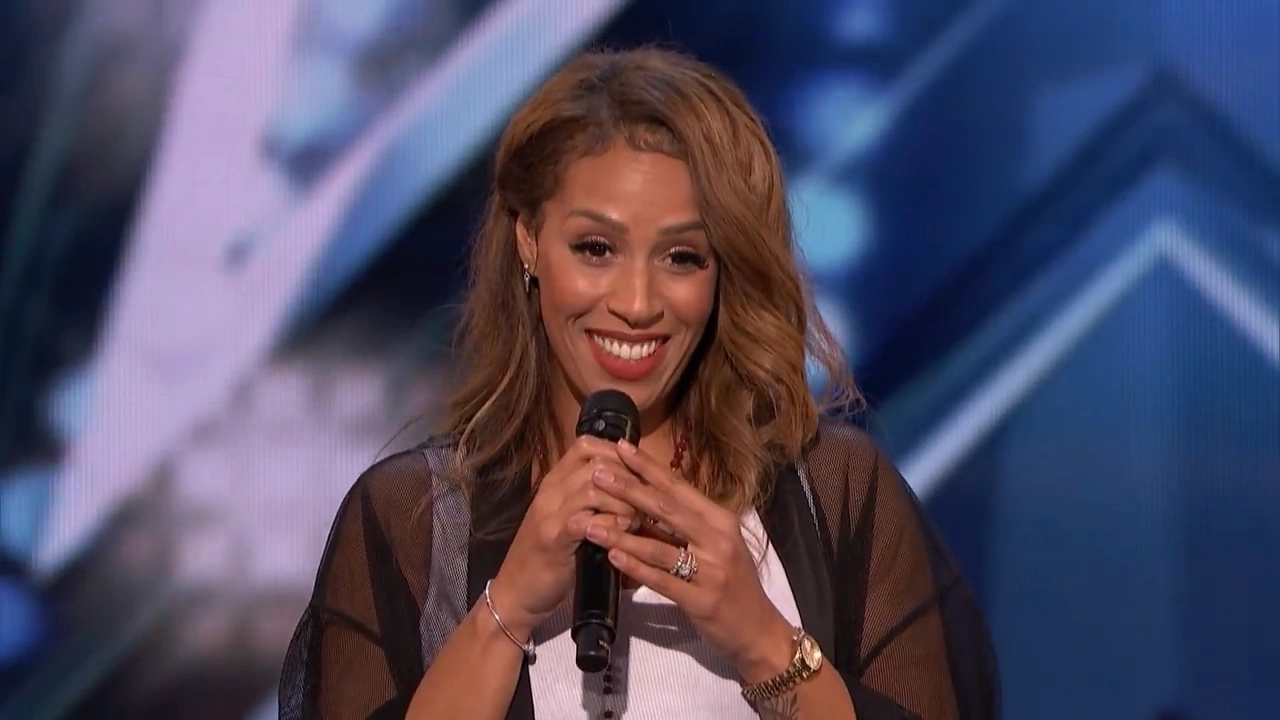
At thirty-nine, Glennis Grace stepped onto the America’s Got Talent stage with a quiet confidence that spoke of years spent honing her craft. She introduced herself not as someone chasing fame for the first time, but as an experienced singer whose ambitions had only grown larger with time. The central thread of her story was simple and deeply human: she wanted to sing for more people and to finally reach the audience she’d always imagined. Standing beside that personal ambition was a smaller, louder motivation — her eleven-year-old son, Anthony. She spoke about how he believed in her in a way that made pursuing this massive American platform feel not only possible, but necessary.
That dual motivation — seasoned experience combined with a mother’s desire to follow a dream for her child — gave the performance an emotional edge even before a single note was sung. The judges listened not just to the voice, but to the life behind it: years of late-night rehearsals, small shows, moments of doubt, and the steady push of a child who wanted his mother to be seen. This context made the stakes feel higher. It wasn’t merely an audition; it was the culmination of a career’s worth of striving, presented for millions to witness in one high-pressure moment.
Glennis chose a towering challenge: “Run to You,” a song indelibly associated with Whitney Houston’s monumental talent. From the opening phrase, the resemblance was striking. The timbre of Glennis’s voice carried that same luminous quality — rich, resonant, and capable of both delicate nuance and thunderous power. She didn’t attempt a pale imitation; instead, she channeled the emotional core of the piece, honoring the original while bringing her own interpretive choices to the fore. When she leaned into a phrase, you could hear the years of vocal discipline behind it: breath control that allowed for long, sustained lines; dynamic shading that made crescendos feel earned; and phrasing that communicated the lyric’s longing without slipping into melodrama.
As the song progressed, the auditorium became rapt. Small, almost involuntary reactions spread through the crowd: a held breath here, a soft intake of air there. Judges who are used to seeing polished performances from unknown contestants found themselves visibly moved. The standing ovation that erupted at the end felt organic, not staged — the applause of people who’d just witnessed something rare. Their reaction underscored what the performance had already suggested: this was not merely a talented singer performing a famous song; this was an artist connecting with an audience on a profound, almost intimate level.
The judges’ responses crystallized that sentiment. Simon Cowell, notorious for his blunt assessments, surprised many by acknowledging Glennis as someone who already bore the markings of stardom. His words — “I feel like I’m looking at a star already, I’m going to be honest with you” — carried the weight of an industry veteran recognizing form and potential. Mel B’s compliment was both specific and effusive: “You do sound so much actually like Whitney, it’s unbelievable.” It wasn’t just a comment on vocal similarity; it was an acknowledgement of the technical and emotional elements Glennis had summoned to evoke that iconic sound. Howie Mandel summed it up with a sentiment that captured the heart of the show’s mission: exposure. “The only reason why you’re not a star yet is because we haven’t seen you and we haven’t heard you,” he said, pointing to the role platforms like AGT can play in transforming a career.
Those four resounding “yeses” were more than a gateway in a competition; they were validation. For an artist who had worked for years in relative obscurity, being told by a panel of seasoned judges that she possessed star-making qualities was a moment of reckoning. It validated the sacrifices, the late nights, the rehearsals that weren’t glamorous but were essential. It was also a gift for Anthony, whose belief in his mother had been part of the impetus for this leap. You could imagine him watching at home — or sitting among the audience — swelling with pride as the judges rose to their feet.
What made Glennis’s audition so compelling was the blend of technical mastery and emotional authenticity. There were no flashy gimmicks, just a voice that could inhabit a song fully, from its whispered beginnings to its climactic moments. The success of the audition lay in that balance: she demonstrated the vocal fireworks listeners expect from a Whitney Houston interpretation, while also revealing a private, human vulnerability that made her performance accessible and real. This combination is what transforms a competent rendition into a career-defining moment.
In the immediate aftermath, the cheering, the judges’ praise, and the buzz on social media began to coalesce into something greater than a single great audition. It became a narrative about an artist finally being seen on the scale her talent warrants. For Glennis, those “yeses” meant more than advancement in a show; they represented the possibility of reaching a broader audience, the chance to turn years of craft into a platform that could change the course of her career. And for viewers, it was a reminder that sometimes the most powerful moments onstage come not from novelty, but from the timeless combination of hard work, heartfelt motivation, and a voice that refuses to be ignored.