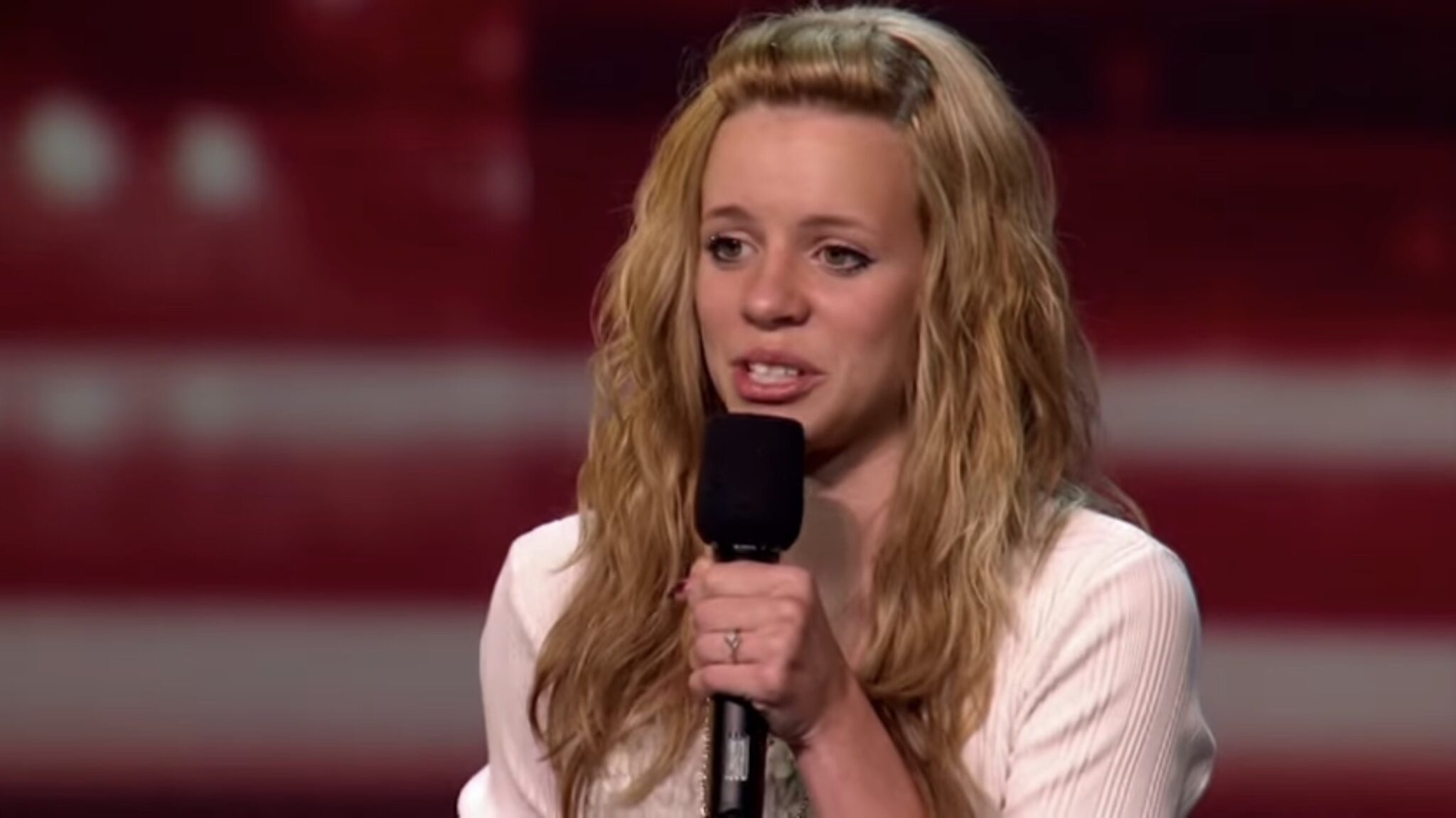
When Drew Ryniewicz walked onto The X Factor USA stage in 2011, she did so with the kind of bright, earnest energy that only a 14-year-old can carry—part shy teenager, part wide-eyed fan. Hailing from Chino Valley, Arizona, she immediately endeared herself to the judges with small confessions: a childhood crush on Justin Bieber, a story about wearing a purple shirt just to catch his eye, and the kind of self-aware humor that made her feel real rather than rehearsed. Those little anecdotes painted the picture of a girl who loved pop music the way most teens do—wholeheartedly and without irony. But then she surprised everyone by saying she planned to sing a slow, acoustic version of Bieber’s hit “Baby.” The judges exchanged looks: intrigued, yes, but also a touch skeptical. Could a young singer take an upbeat teen pop song and reshape it into something meaningful?
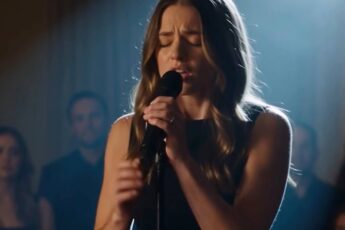
From the first delicate note, it became clear Drew wasn’t trying to mimic the original. She stripped the song of its bubblegum bounce and rebuilt it with sparse, haunting instrumentation—more hymn than radio single. Her decision to slow the tempo wasn’t a gimmick; it was a deliberate artistic choice that let the lyrics breathe and revealed new layers of emotion. Her voice, soft yet precise, carried a vulnerability that felt almost confessional. You could hear the nuance in the way she bent certain notes, the subtle dynamics as she moved from quiet intimacy to fuller resonance. Those shifts were small but telling: this was a singer who understood that silence and space are as important as sound.
The arena, which had been buzzing and expectant seconds earlier, fell completely silent. When a performance achieves that kind of hush, it’s a rare thing—an audience collectively leaning in, held not by spectacle but by the sense of witnessing something unexpected and true. Drew’s interpretation of “Baby” felt stripped of pretense. Rather than trying to impress with vocal fireworks, she focused on storytelling. The words about young love, heartbreak, and longing were suddenly weighty; lines that once skimmed lightly over teenage sentiment took on a more universal ache in her hands. It was as if she had plucked the emotional core from a pop song and set it in a frame that revealed its heart.
Judges’ reactions reflected the stunned atmosphere. L.A. Reid, known for his strict ear and industry experience, smiled in disbelief—an unguarded expression that said he had not expected such depth from a contestant so young. Simon Cowell, whose career has been built on spotting raw, unpolished talent, watched with a kind of focused intensity, the look of someone who knows when a rare voice has just walked into the room. Paula Abdul seemed quietly moved, her eyes reflecting the emotional honesty of the performance. Together, their faces traced a progression that matched the music: surprise, recognition, and finally, admiration.
Afterwards, the feedback was effusive. Simon’s declaration that Drew was “one of the best” they had seen became the headline, but the sentiment was more than hyperbole. It captured a deeper truth about originality: talent isn’t merely the ability to sing a song well; it’s the capacity to reinterpret something familiar and make it feel brand new. L.A. Reid praised her bravery—there’s real risk in taking a well-known pop anthem and deconstructing it. The move could easily backfire, turning cleverness into awkwardness. But Drew’s rendition avoided that trap because it came from a place of honest artistic choice rather than shock value. Paula Abdul’s emotional response further underscored that the performance connected on a human level.
Drew’s audition also highlighted how youthful curiosity can intersect with mature musical instincts. At 14, she hadn’t yet been shaped by industry pressures or public opinion. That freedom may have allowed her to take risks without second-guessing them. She transformed a crowd-pleaser into a quiet, affecting ballad, proving that a great interpretation can transcend age and genre. The way she handled the song—measured breath control, nuanced phrasing, and a restraint that suggested deep musicality—hinted at training or natural aptitude, or perhaps both.
When the votes were read and she received four unanimous “Yes”es, it felt like formal recognition of something that had already been obvious in the room: Drew wasn’t just a talented kid with a cute backstory—she was a budding artist with a rare instinct for reinterpretation. Moving on in the competition as a breakout act, she left the stage having done more than impress the judges; she had shifted expectations. Viewers and industry figures alike were reminded that great performances often happen when an artist strips away expectations and simply lets the song say what it needs to say.
Years later, that audition remains memorable because it served as a masterclass in creative courage. Drew proved that true talent often lies in the ability to take the familiar and reveal its hidden possibilities. She didn’t need vocal acrobatics or elaborate staging; she needed only a quiet arrangement, a thoughtful approach, and the confidence to let her voice lead. The result was a performance that felt both intimate and expansive—a young singer’s bold reimagining that turned a pop hit into something hauntingly beautiful.