Eleven years I stood beside Julian Hale at every gala, every launch, every magazine spread celebrating “his” fashion empire, smiling as reporters called me simply “the founder’s wife.”
What Julian never told anyone — not the board, not the press, not even his own mother — was that when we married, he was drowning in debt no bank would touch. My inheritance had quietly funded the entire company from day one, structured through a private trust that gave me sixty-one percent ownership. I never asked for credit. I just wanted him to succeed.
Then came the affair. Then came the whispers from staff who’d seen his mistress slipping into his office after hours. Then, three weeks ago, I found the divorce papers his lawyer had drafted in secret — quietly attempting to reclassify my shares as marital property, to be split fifty-fifty.
I didn’t confront him. I didn’t cry.
I called my father, the retired judge who’d overseen the original trust paperwork, and asked him one question.
“How fast can the board convene?”
Tonight, at his own product launch gala, I got my answer.
Continued in the c0mments 
The gallery doors closed behind me as I walked out into the falling snow. My driver held the door of the car open, and I slid inside without looking back.
My phone rang before I’d even settled into my seat.
“The board has quorum,” my attorney said calmly. “Everyone’s confirmed.”
“Has Julian been told?”
“Not yet.”
“Good.”
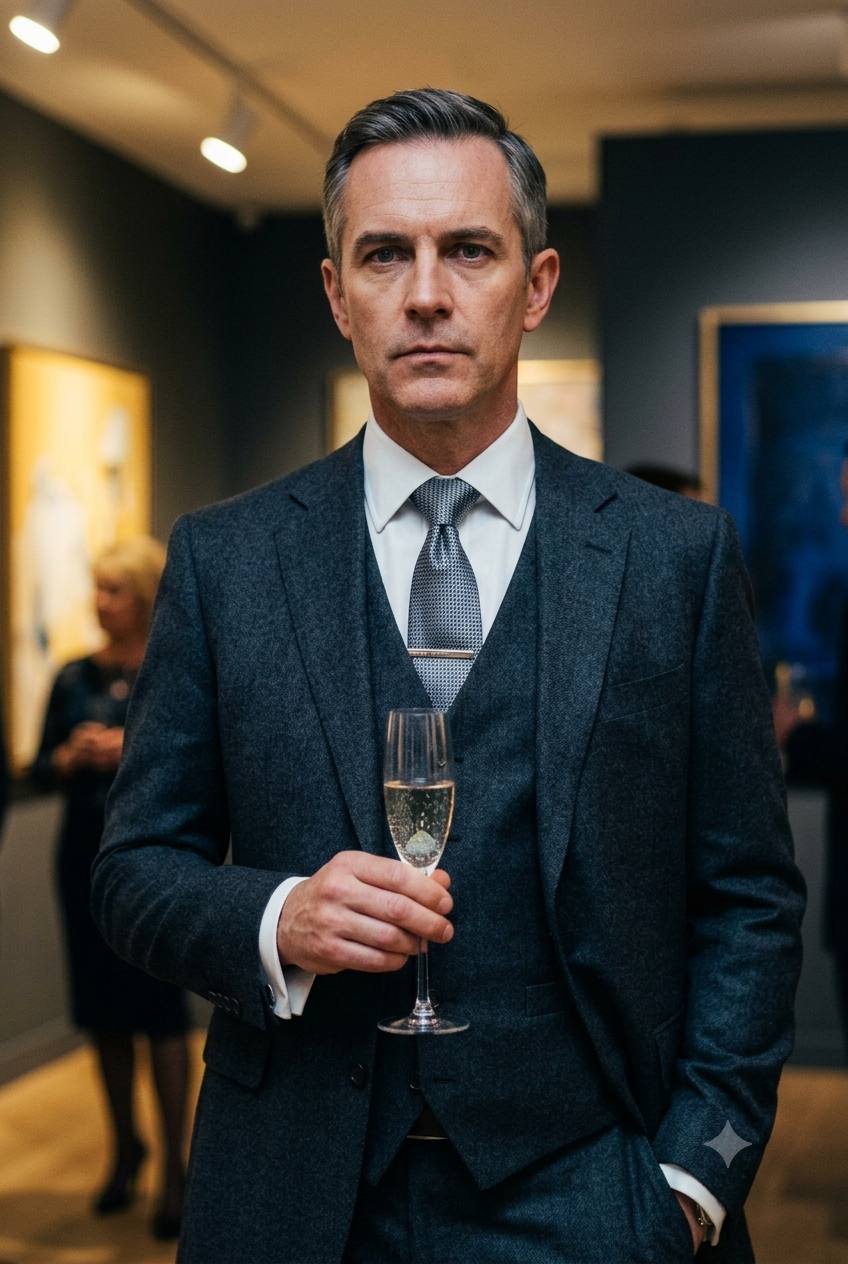
Inside, Julian’s product launch continued in full swing. He stood at the center of the room in his tailored suit, champagne in hand, his mistress draped against his arm, laughing loudly enough for half the gallery to hear.
“Finally,” he said. “No more hiding this.”
An events coordinator approached him nervously. “Mr. Hale — corporate is requesting an emergency call. They say it can’t wait.”
Julian waved her off. “Tell them tomorrow.”
“They were very clear, sir. Now.”
Minutes later, every screen in the private lounge lit up simultaneously. My father’s old colleague, the company’s General Counsel, appeared on the call flanked by two board members.
“Mr. Hale. Effective immediately, your authority as Creative Director and acting CEO is suspended, pending an emergency board resolution.”
Julian scoffed. “You can’t suspend me. I am this brand.”
“No,” the counsel said evenly. “But the majority shareholder can.”
His phone buzzed. Executive Access Revoked.
He pushed through the stunned crowd toward the private elevator, jamming his keycard against the scanner. It flashed red.
ACCESS DENIED.
Rattled, he sprinted to his office instead. The biometric lock rejected his palm print twice.
His mistress stared at him, mascara smudging under the gallery lights. “Julian — what is happening?”
Before he could answer, two security officers stepped calmly from the stairwell.
“Mr. Hale,” one said, extending an open hand. “We’ve been asked to escort you off the premises.”
Julian’s confident smile finally cracked. He looked around the room full of investors, editors, and photographers who had just watched his entire empire dissolve in under three minutes.
“Wait,” he said, voice rising. “Someone tell me who the majority shareholder even is.”
The General Counsel’s voice came through the speaker one final time.
“Victoria Hale. Your wife. She’s owned sixty-one percent of this company since the day you signed the founding papers in her name to avoid your creditors.”
The room went utterly silent. Every camera in the gallery turned toward the empty space where I’d been standing minutes earlier.
I didn’t need to be there for the rest. I already knew how it would end.
Julian didn’t fight the board’s decision — there was nothing left to fight. The trust documents were airtight, drafted a decade earlier by a judge who had quietly anticipated exactly this outcome.
Within a month, Julian’s name was removed from the company masthead entirely. The divorce settlement, once designed to strip me of my shares, instead confirmed what had always been true: I had built this. I had funded it, protected it, and now I would run it.
His mistress didn’t stay long either. It turned out reporters were far less interested in a disgraced former creative director than in the woman who’d quietly built an empire in silence for over a decade and had just stepped, fully and finally, into the light.
I didn’t rename the company. I didn’t erase Julian from its history. I simply added my own name beside his on the founding wall, in the same size lettering, and let the truth speak for itself.
A year later, at the very same gallery where it had all unraveled, I stood at the podium unveiling the brand’s new creative direction — my vision this time, credited entirely to me.
“I spent eleven years letting someone else hold the microphone,” I told the room, looking out at a crowd that had once only ever seen me as “the founder’s wife.” “Tonight, I’m simply done handing it over.”
The applause that followed wasn’t for Julian’s empire.
It was for mine.