My sister Brooke was marrying a surgeon.
My grandmother had already told half the family I was “the sad one.”
So when the wedding invitation arrived with a plus-one, I panicked.
I didn’t have a boyfriend. I hadn’t had one in three years.
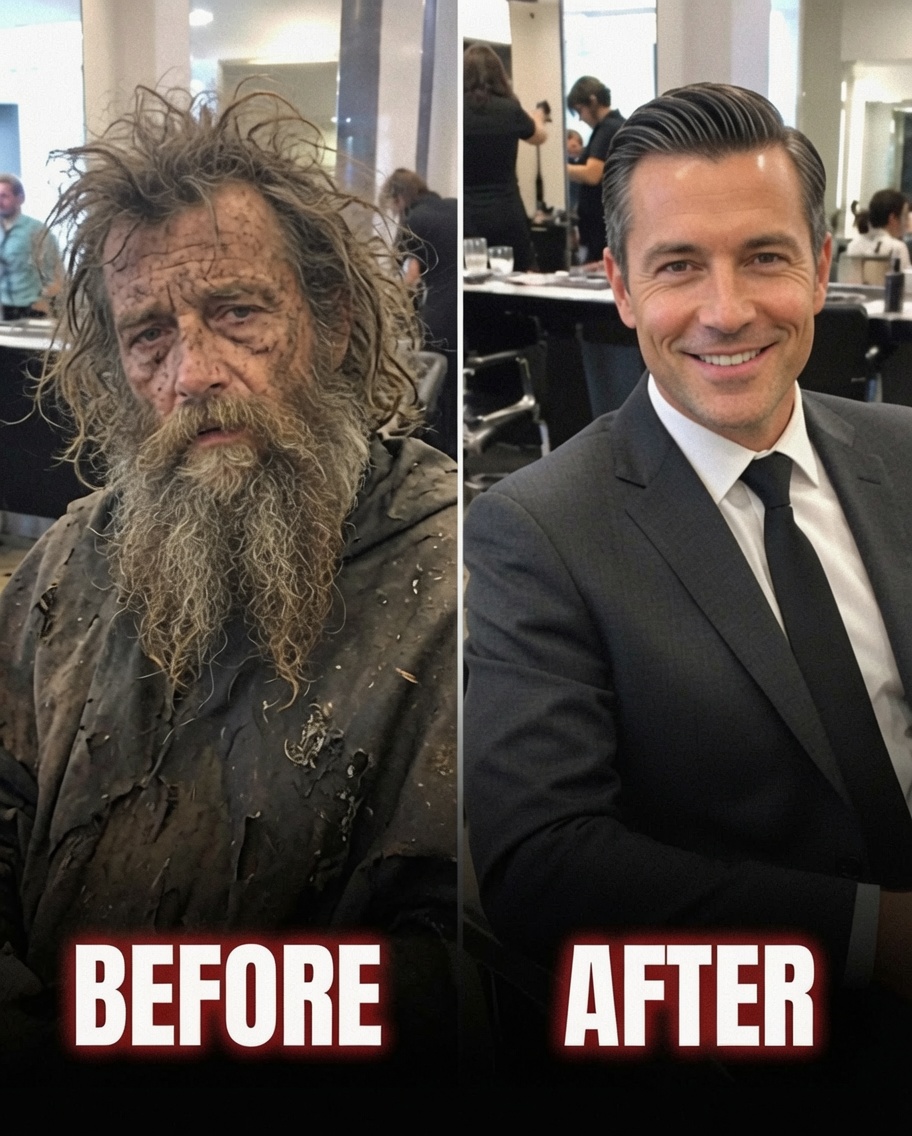
That’s when I saw him — a man playing violin outside the coffee shop on Fillmore Street. His coat was too thin for October. His shoes were held together with tape.
But the music. My God, the music.
People walked past him like he was invisible. I dropped a twenty in his case and sat on the curb until he finished.
“I have a strange offer,” I said.
His name was Daniel. He was forty-two. He agreed to be my fake husband for one weekend in exchange for a hotel room, three real meals, and a proper coat.
I bought him a charcoal suit. A barber shaped his beard. When he stepped out of the fitting room, I actually forgot how to breathe.
He looked like someone who belonged in a museum.
At the rehearsal dinner, everything went perfectly. He charmed my aunts. He made my father laugh. Brooke whispered, “Where have you been hiding him?”
Then my grandmother arrived.
She hugged me. She turned to greet Daniel.
She saw his hands.
Her wine glass slipped from her fingers and shattered on the marble floor.
Her knees buckled. My uncle caught her before she hit the ground.
And through pale lips, she whispered one word.
“Thomas.”
Daniel went completely still.
Part 2 in the comments 👇👇
The room emptied fast.
My mother rushed my grandmother to the sofa in the sitting room. Brooke was crying. My father was shouting for someone to bring water.
I stood frozen in the doorway, staring at Daniel.
He hadn’t moved. He was still looking at his own hands like he’d never seen them before.
“Who is Thomas?” I asked quietly.
He didn’t answer.
I grabbed his sleeve and pulled him into the coat room off the hallway. I closed the door behind us.
“Daniel. Who is Thomas?”
He sat down slowly on the little velvet bench. When he finally looked up at me, his eyes were wet.
“Thomas was my father,” he said. “He died when I was six.”
I felt the floor tilt underneath me.
“He was a violinist too,” Daniel continued. “He played in the symphony in Portland. My mother took me and left when I was five. She never told me why. She wouldn’t even say his name after we moved.”
He turned his palms up. Long fingers. A small scar across the left knuckle.
“People used to say I have his hands.”
I didn’t know what to say. I sat down beside him.
“My grandmother lived in Portland,” I whispered. “Before she married my grandfather.”
We looked at each other.
Then the door opened.
My grandmother stood there, holding onto the frame. My mother was behind her, trying to make her sit back down. But my grandmother waved her away.
“Leave us,” she said. Her voice was steadier than her hands.
My mother hesitated, then closed the door.
My grandmother sat across from Daniel in the armchair. She studied his face for a long time.
“You have his eyes too,” she finally said. “I only knew Thomas for one summer. I was nineteen. My parents did not approve. They sent me away before I could tell him.”
She looked down at her lap.
“I wrote to him for a year. He never answered. I thought he had forgotten me. I learned much later that his mother was throwing away my letters. By the time I found out, he was already married. He had a son.”
She looked at Daniel again.
“He had you.”
Daniel’s mouth opened, but no sound came out.
“I saw him one last time in 1979,” she said. “At a concert in Seattle. I sat in the back row. He never knew I was there. Three months later, I read in the paper that he had passed.”
She pressed a handkerchief to her eyes.
“I have carried his picture in my wallet for forty-six years.”
She reached into her purse with shaking hands and pulled out a small, cracked photograph. She held it out to Daniel.
He took it carefully, like it might break.
I looked over his shoulder.
A young man in a tuxedo, holding a violin. Smiling at whoever was behind the camera.
The resemblance was undeniable.
Daniel started to cry. Silently at first. Then his shoulders shook.
My grandmother reached across and took his hand. Her thin fingers wrapped around his taped-up cuff.
“I do not know what your life has been,” she said. “But you are not alone anymore.”
I stepped outside and closed the door behind me. I stood in the hallway for a long time, listening to the muffled sound of two strangers finding each other after half a century.
The wedding happened the next day.
Daniel did not sit at my table. He sat at my grandmother’s, holding her hand between courses.
He is not my husband. He never was.
But he is family now.
He plays at every holiday. My grandmother closes her eyes when he does, and I think she is nineteen again, listening to a young man in Portland who never got her letters.
Sometimes the lie you tell to escape your family is the one that finally brings it home.