
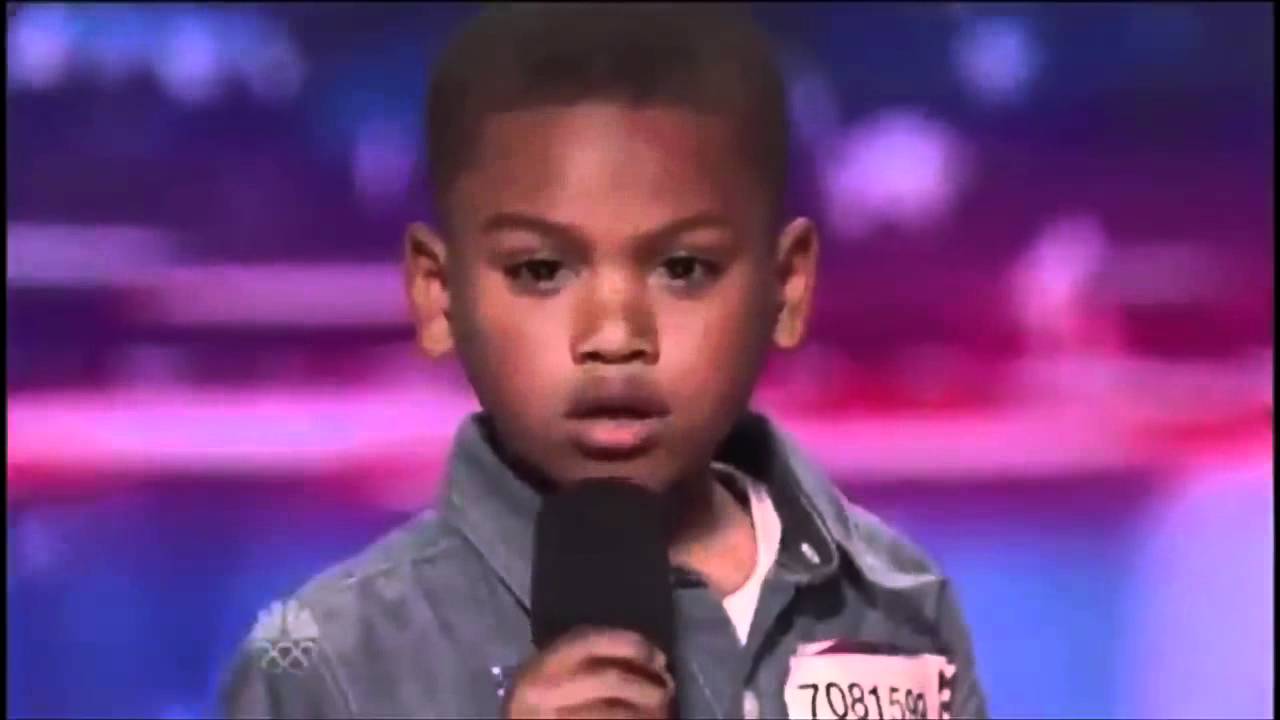
When the curtains opened for the America’s Got Talent audition that day, a small figure walked onto the stage with an attitude that mixed bravado and innocence in a way only a child could pull off. He was seven years old, wearing headphones around his neck like a badge of confidence, clutching the mic with both hands. When the host asked the usual, “What would you do with the prize money?” his answer landed like a tiny, heartbreaking mission statement: “Look after my family.” For a moment the studio quieted in a different way—this wasn’t just a kid performing for fun; there was purpose behind his smile.
He launched into his rap with surprising poise. The beat dropped and he matched it, bobbing his head, punching his lines with the kind of rhythm a child might learn from watching videos with an older sibling or practicing in the mirror. His flow wasn’t flawless, and there were stumbles—words ran together, timing wavered—but there was heart in every bar. You could see him looking out at the judges for approval, eyes bright and earnest, as if the stage lights were a kind of sun he wanted to bask in. Parents in the audience leaned forward; a few people wiped at their eyes when he mentioned his family. It was exactly the kind of underdog performance that reality TV loves.
Then the moment came as sudden as a snapped string. Howard Stern, one of the show’s most famous and outspoken judges, pressed the buzzer. The loud, abrupt clang cut through the music like a cold gust. To anyone watching, it felt disproportionate, an adult censure aimed at a child who was still learning the rules. The boy’s expression changed immediately—first confusion, then a small, rupturing heartbreak. The tears came fast, a visible drop followed by big, ragged sobs, and within seconds he was crying openly onstage, shoulders shaking. The crowd, which moments earlier had been quiet and attentive, erupted into sympathetic murmurs and a chorus of “aww”s. It was a shock to see such raw emotion laid bare in a place designed for spectacle.
What happened next surprised nearly everyone. Stern rose from his seat, an unusual gesture that shifted the tone in the room. He walked down the stage steps and approached the child with a gentleness that contrasted sharply with the buzzer’s harshness. Stern crouched to be at eye level—small acts that matter when you’re trying to soothe a seven-year-old—and used words that felt almost paternal. He told the boy he was “a terrific young man” and called him “so brave.” Then, in an uncharacteristically tender admission, Stern said the world of being a professional performer felt “too rough” for someone his age. That one sentence, delivered with an odd mix of bluntness and care, reframed the whole moment: this was less about a brutal dismissal and more about an adult acknowledging limits and trying to protect a child from harm.
The interaction exposed the emotional tightrope talent shows force kids to walk. On one hand, contestants are expected to present their best selves under bright lights and unforgiving judgment. On the other hand, judges and audiences are human beings with the power to shape a child’s self-worth in a matter of minutes. The episode was a reminder that even the most hardened celebrity can show softness—that criticism can coexist with compassion if delivered thoughtfully. Stern’s move to comfort the boy tempered the sting of the buzzer, and for many viewers it was a redeeming act: messy, imperfect, but sincere.
Backstage, the noise of cameras and offstage staff couldn’t immediately erase the moment’s intimacy. Parents hugged their own children closer; some viewers on social media replayed the clip and debated whether Stern should have been gentler from the start. Others praised his quick physical gesture and the words he chose after the buzzer—calling him brave, telling him he had worth apart from the verdict. Clips spread online with comments like “That made me cry” and “Kids shouldn’t be judged so harshly,” sparking conversations about the ethics of putting children in adult-sized spotlight situations.
For the boy himself, the experience was complicated. He left with tears on his cheeks but also with a compliment from someone who rarely hands them out. He had tasted both a public rebuke and an unexpected compassion, a strange combination that might shape how he sees criticism and resilience in the years to come. His family, sitting ringside, likely felt the same mix: pride in his courage, sorrow at his moment of pain, and perhaps gratitude that someone stepped closer to offer comfort.
Ultimately, the scene was more than a TV moment—it was a small human drama played out under studio lights that invited viewers to reflect. It asked us whether entertainment should trump tenderness, and reminded us how quickly a buzzer can break a child’s composure. It also showed that even in settings geared toward spectacle, empathy can still surface: an adult judge stepping down from his throne to meet a child where he was, telling him that courage and care matter more than a single verdict. In that way, the episode left a lesson as clear as the boy’s tear-streaked face—anyone who climbs onto a stage, especially a child, deserves not only a chance to perform but also a measure of protection and respect.