
For as long as anyone could remember, his hair had been a constant — a thick, unruly curtain that framed his face and trailed down his back. It wasn’t styled or treated like a fashion statement; it was simply part of him, like a favorite sweater he never thought to take off. Family photos through the years all showed the same silhouette: long hair catching the light, sometimes tied back in a loose knot, sometimes hanging free and windblown. It became an unremarkable fixture of his daily routine: wake up, run fingers through the familiar weight, maybe sweep it behind an ear, and go about the day. After a while he hardly registered it at all. When things are constant, they tend to fade into the background of our lives.
So when he began to entertain the idea of cutting it, it felt almost foreign. The thought started small — a fleeting curiosity after watching someone else’s dramatic before-and-after video, or a passing compliment about how a shorter style might suit his face. He would stare at his reflection for longer than usual, wondering how a different outline might change the person standing there. It wasn’t about conforming to trends or trying on someone else’s image; it was more a quiet question: What would it feel like to see myself anew?
The decision didn’t come overnight. It was a slow, thoughtful accumulation of little nudges: a friend’s offhand remark, a hot summer day when the long strands clung to his neck, and the strange realization that the hair had been doing more to define him than he’d allowed. Finally, one afternoon he walked into a barbershop with more nerves than he’d expected. The place smelled of aftershave and clean towels, a comfortable hum of radios and conversation in the background. He sat under the bright lights, fingers worrying the edge of the cape the stylist draped around him, feeling oddly exposed.
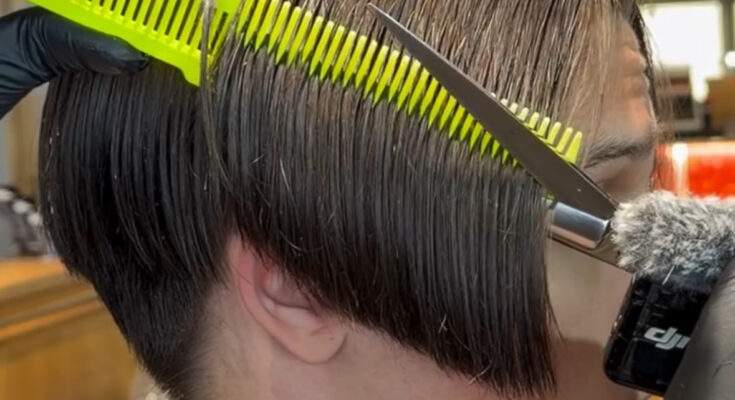
When the scissors opened and that first lock of hair fell away, there was a curious sensation — part relief, part grief, as if he’d cut a ribbon tying him to a past self. The stylist worked methodically, snipping with practiced rhythm, occasionally pausing to ask a question or show a mirror. Strands collected on the cape like a dark pile of seasons gone by. Each cut seemed to unburden him a little: the weight of the hair, the hours spent drying and detangling, the small rituals of care that had become nearly automatic. Those minutes felt ceremonious, a quiet shedding of accumulated habits.
As the length shortened, his face revealed details that had been tucked away for years. A strong jawline emerged, cheekbones looked more pronounced, and his eyes seemed to catch the light differently. He noticed a faint scar by his temple he’d forgotten about, and a smile line that suggested years of laughter. The haircut highlighted features that had been present all along but were hidden beneath the familiar curtain. Looking into the mirror, he found himself pausing — not in shock, exactly, but in a stunned kind of delight.

The reaction from friends and family was immediate and varied. His younger cousin let out an exaggerated gasp and then laughed, saying, “You look like someone from a magazine!” His mother reached out, running her fingers over his newly exposed neck as if confirming the change was real. Even his dog seemed to tilt its head, curious at the altered scent and silhouette. Compliments arrived, some tentative, others enthusiastic: “You look so much more confident,” someone said. Another remarked, “It really suits you.” Those words were small but meaningful. They weren’t just about appearance; they hinted at a shift in how others perceived him, and perhaps how he perceived himself.
What surprised him most was how quickly his posture changed. He found himself standing a little taller, shoulders back instead of hunched to hide behind the long mane. Where he might once have ducked his head in crowded rooms, he now met eyes more readily. The haircut seemed to unclench something internal, opening space for a new kind of presence. Simple daily routines felt different too: showers were quicker, hairbrushes gathered dust, and styling became intentional instead of automatic. The time he reclaimed from haircare allowed him to try other small experiments — a fresh color on his nails, a new jacket, a willingness to accept invitations he might have declined before.
That transformation was not purely cosmetic. Cutting his hair became a symbolic act, a tangible way of saying he was ready for change. People often talk about haircuts as rites of passage, and in his case it felt true. The new image didn’t erase who he had been; rather, it revealed a version of himself that had always existed, waiting for a visible form. It was a reminder that identity can be fluid and that sometimes letting go of a long-held thing creates space to grow.
In the days that followed, strangers would do double-takes and then offer unexpected smiles. He found himself enjoying the novelty of being recognized in a slightly different light. The haircut didn’t solve every worry or answer every question he had about the future, but it did provide a fresh lens through which to view his choices. It showed him that small, deliberate acts can ripple outward, changing how we move through the world.
Ultimately, what started as a simple decision to get a haircut became a quiet, powerful transformation. It taught him that change needn’t be dramatic to be profound, and that sometimes the most meaningful shifts begin with something as ordinary as a pair of scissors.