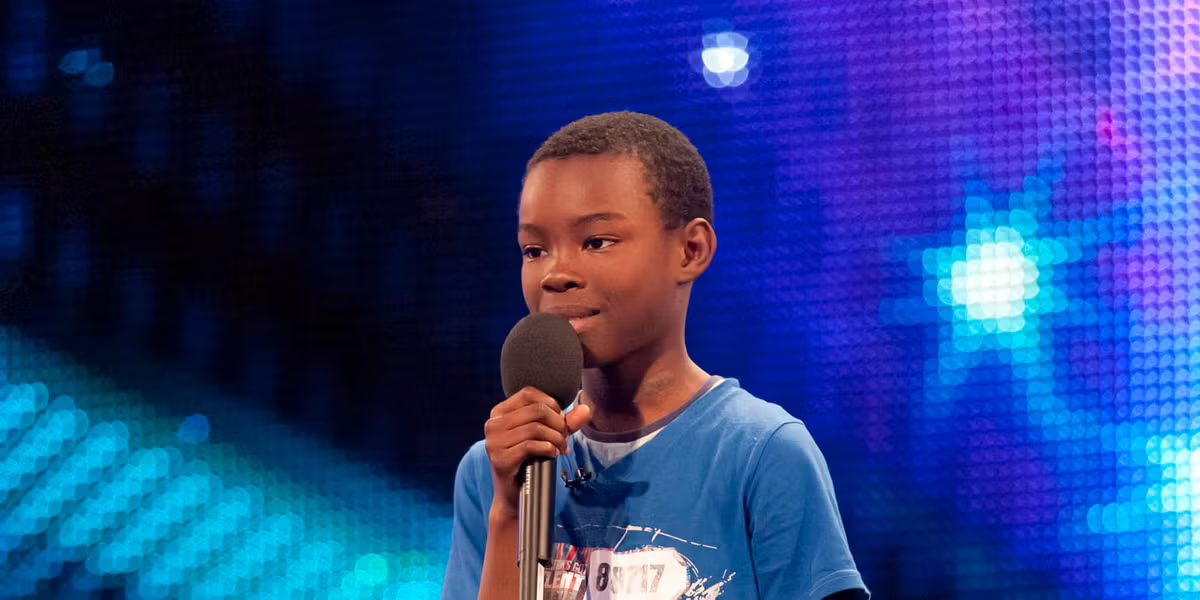
Stepping onto the Britain’s Got Talent stage, nine-year-old Malaki Paul looked smaller than the towering lights and the cavernous auditorium around him. He shuffled his feet for a moment, took a breath, and glanced toward the wings where his mother stood watching with a mixture of pride and worry. The magnitude of the moment was stamped across his face — that peculiar blend of excitement and terror that only a child can wear so honestly. Choosing “Listen” from Dreamgirls was a bold move; it’s an emotional anthem that demands control, range and a sense of lived experience few adults can pull off, let alone someone still in primary school. Yet for the opening bars, Malaki surprised everyone. His voice projected with a warmth and maturity that didn’t seem to belong to someone so young, and for a beat the audience leaned in, clearly captivated.
Then, as the song built and the spotlight intensified, the pressure of performing on one of the biggest stages in the country became too much. Mid-phrase, Malaki’s shoulders slumped and the notes faltered. He stopped singing altogether, and the composure that had briefly steadied him dissolved into tears. In an instant the atmosphere shifted from rapt attention to collective concern. You could hear a ripple through the crowd — a sympathetic gasp, followed by encouraging murmurs. The judges exchanged looks, visibly moved, and the auditorium seemed to shrink around the boy who had just been swallowed by his feelings.
What happened next was quietly extraordinary. Without a second thought about rules or protocol, Malaki’s mother pushed through the wings and hurried onto the stage. She crossed the shining floor in a few determined strides and wrapped him in a tight, unselfconscious embrace. It was a human moment that cut through the glitz: a mother and her child, the formal trappings of competition evaporating for a heartbeat. Cameras circled, lights glowed, but the world narrowed to that hug. Viewers at home and people in the audience were offered something far more raw than the usual polished performances — an honest reminder that fear and love exist right beside talent.
The judges and host paused, letting the scene breathe. Simon Cowell and the others kept their distance, deferring to the simple, necessary act of comfort. The moment was not theatrical; it was necessary. Malaki’s mother whispered into his ear, probably offering the familiar reassurances a child needs when the world feels too large. Watching him lean into that support, wiping his face, taking slow breaths, it was impossible not to feel for him. There was a vulnerability in his expression that made his later courage all the more real.
After a few minutes, something shifted. With his mother’s hand on his back and her presence at the wings instead of the stage, Malaki stood taller. He took another breath, squared his shoulders, and asked quietly if he could start again. That request — humble, brave, and utterly human — prompted one of the warmest reactions of the night. The audience, already won over by the earlier breakdown, rose in approval. It felt less like a competitive reversal and more like a communal rooting-on. Everyone in that room wanted to see him succeed, not because of the novelty of his moment, but because they had witnessed his courage to face his fear.
The second attempt felt almost miraculous. Freed from the need to be flawless and buoyed by the support around him, Malaki sang as if the moment had shifted from a trial to a revelation. His voice carried more conviction and texture; where before he had been technically impressive, now he sounded lived-in and sincere. Small details made the difference — the way his phrasing softened on the lines that demanded tenderness, the confident placement on higher notes, the subtle emotional inflections that told a story beyond the melody. The audience responded in kind, leaning in, clapping softly at the right moments, and letting the final crescendo land with genuine applause rather than obligatory admiration.
When the judges gave their verdict, the responses reflected more than just approval of a polished performance. Alesha Dixon called him a “natural raw talent,” words that acknowledged both his innate ability and the emotional honesty he brought to the stage. Simon Cowell’s praise for his bravery summed up what many felt: that stepping back up after falling apart was sometimes a greater achievement than never faltering at all. The four unanimous “Yes” votes were celebratory, but they also felt like an embrace from the entire panel — a recognition of resilience as much as ability.
By the end of the night, viewers were left with more than the memory of an impressive vocal performance. They were reminded that talent and vulnerability often live hand in hand, and that the most memorable moments on a stage don’t always come from perfection but from the courage to continue despite fear. Malaki walked off that stage not just a contestant moving on to the next round, but a small boy whose tears and triumph had touched a nation — a humble, powerful demonstration that sometimes falling apart is simply the first step toward something unforgettable.