
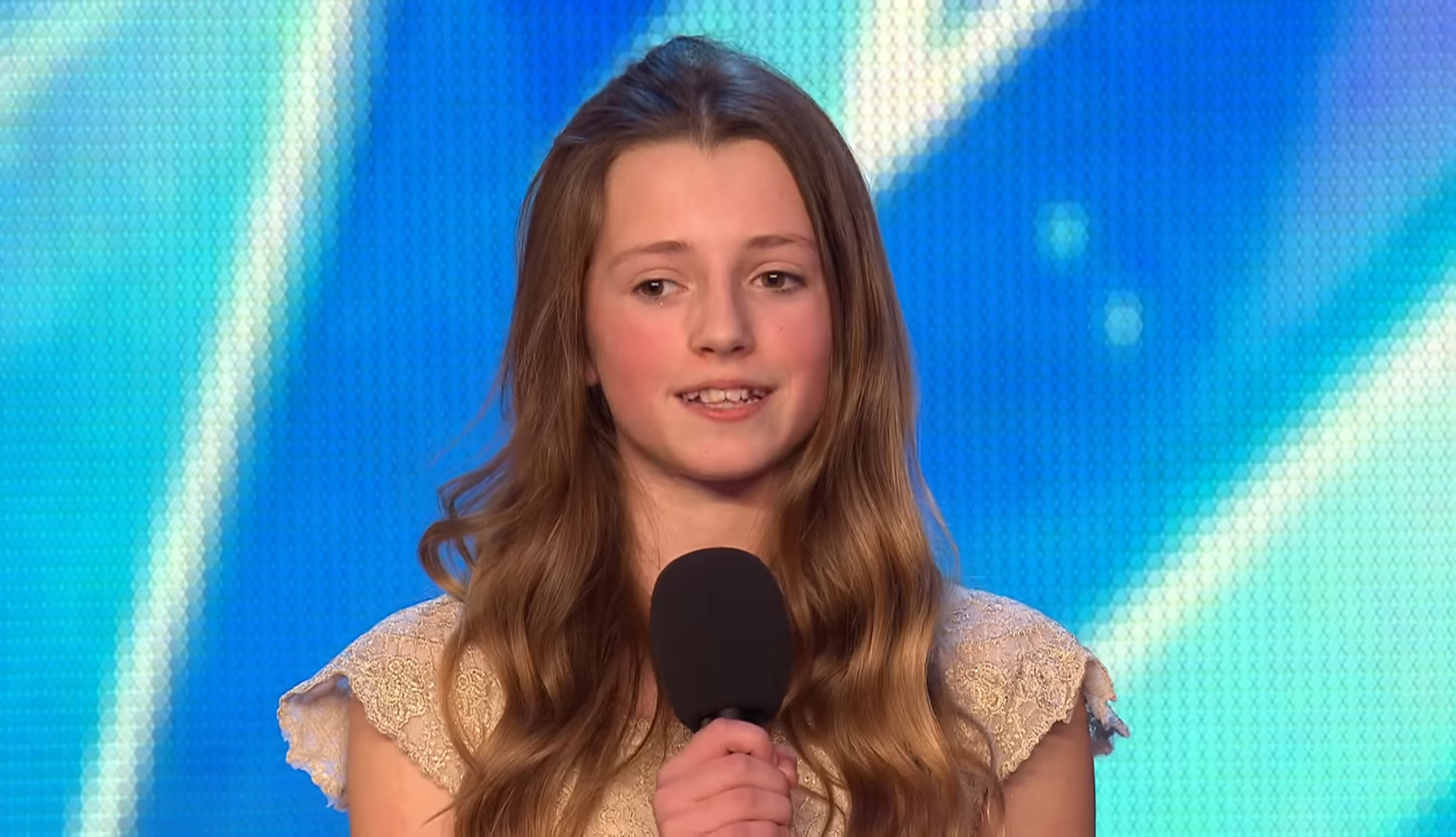
Twelve-year-old Maya Goff walked onto the Britain’s Got Talent stage with the kind of wide-eyed optimism that makes you cheer for someone before they’ve sung a single note. She arrived surrounded by a large and visibly proud family — cousins, aunts, and parents who beamed from the front rows — and she wore a pretty dress that suited her age while nodding to the drama of the moment. There was an immediate warmth to her presence: she fidgeted slightly with her hands, smiled shyly at the judges, and answered questions with the earnestness of a kid who still gets butterflies before school recitals. When asked who inspired her musically, her quick and sure reply — Whitney Houston — caused a ripple of nervous laughter in the room. It was an honest choice, and one that instantly let everyone know she wasn’t aiming small.
The judges exchanged looks; Whitney’s catalogue is notoriously demanding, and the thought of a 12-year-old tackling such material made some of them visibly apprehensive. It was clear they weren’t opposed to her ambition, but there was a practical worry there: could a young voice hold up under the technical gymnastics of songs like “I Have Nothing”? Maya, however, seemed undeterred. She announced her choice with a quiet confidence that suggested she’d rehearsed the moment in her head a thousand times. Even her family’s tightened hands and nervous smiles felt like a collective holding of breath — not a hope for comfort, but a hope for astonishment.
From the very first note, any doubts evaporated. Maya didn’t merely sing the song; she inhabited it. Her opening phrases were clear and controlled, each vowel shaped with a precision that made the melody feel fully formed right away. What followed was a masterclass in dynamics and emotional pacing uncommon in performers twice her age. She navigated the intricate runs and leaps with a poise that suggested rigorous practice and perhaps an instinctive musicality. When the chorus swelled, she met it with a power that was startling for someone so young, but she also knew when to pull back, using softer tones to create contrast and emotional depth. The technical challenges of Whitney’s phrasing — the melismas, the breath control, the dramatic climaxes — were handled with a disciplined artistry that left the room breathless.
There was more to Maya’s performance than technical prowess, though. She brought an emotional intelligence to the song that transformed it from imitation into interpretation. She used her face and posture subtly — a lifted chin at a victorious lyric, a small furrow when the line demanded vulnerability — and those tiny choices made the performance feel personal rather than performative. Watching her, you could see she understood the story inside the lyrics: not just the longing and the plea, but the fierce dignity that the song ultimately celebrates. That maturity in storytelling is what turned heads in the auditorium and made viewers at home sit forward, listening as if to someone who had lived the song rather than merely sung it.
As she approached the climactic passages, the audience’s reaction shifted from polite applause to rapt attention. The final high notes arrived with a clarity and sustain that drew audible gasps. Her breath control held the phrases steady, and the power behind those notes didn’t feel forced; it felt earned. When the last chord decayed, the room erupted into a standing ovation the kind that seems to come from the marrow of an audience — not just polite, but deeply impressed. Her family’s faces streaked with tears and joy, and Maya herself seemed momentarily stunned, blinking as the reality of the applause washed over her. It was the kind of response that can crystallize a young artist’s belief in their own voice.
The judges, normally so measured and quick with critique, found themselves searching for words that fit. Amanda Holden admitted candidly that her initial fear had been Maya attempting and failing to mimic Whitney — but then she corrected herself, saying the audition was “mind-blowingly fantastic.” Amanda’s relief and admiration were palpable; she’d expected a valiant try and instead witnessed something transcendent. Simon Cowell, whose praise carries industry weight, didn’t mince words either. He praised Maya’s command of the stage and insisted she was “miles better than the adults,” highlighting how rare it is to find a young performer who can maintain focus, loyalty to a song, and technical excellence all at once. His comment about her holding the audience’s attention like a seasoned professional was as much an observation of her charisma as it was of her vocal skill.
When the verdict came — four emphatic “Yes” votes — it felt inevitable but no less thrilling. In that moment, the competition acknowledged not just a single great audition, but the arrival of a young artist with enormous potential. Maya left the stage having done more than impress; she had shifted expectations about what a child could accomplish and offered a glimpse of a future in which careful training, natural talent, and emotional maturity could combine into something remarkable. For now, she had the applause, the judges’ endorsements, and a renewed confidence. For audiences, she delivered a reminder: sometimes the most powerful voices are the ones we least expect, and a talented child with courage can sing in a way that makes the entire room listen.