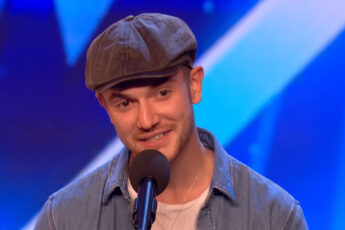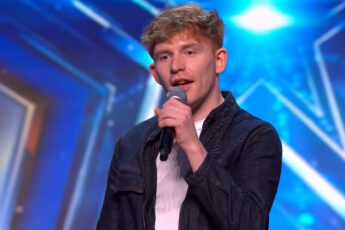
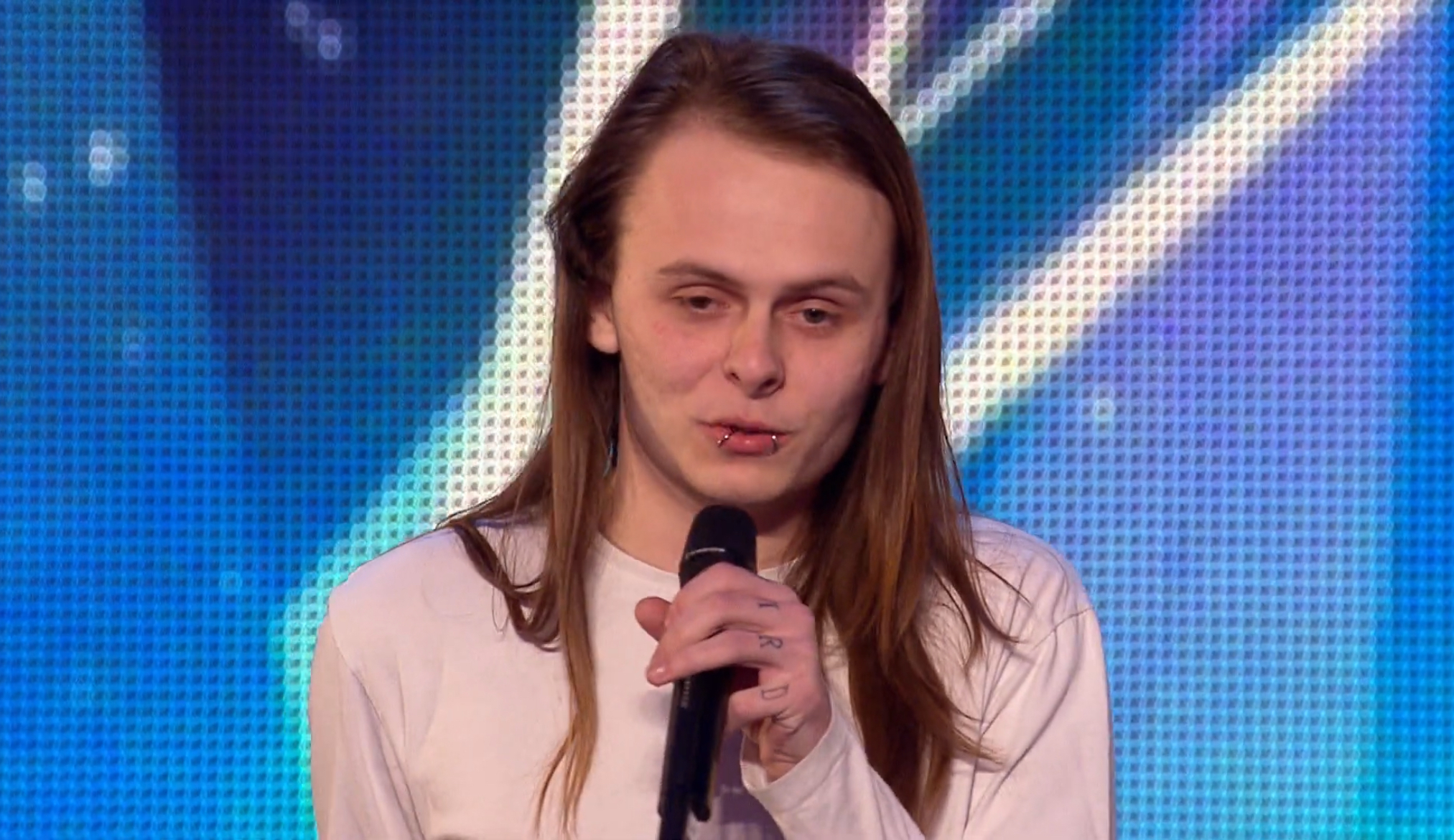
When Aaron Marshall stepped onto the Britain’s Got Talent stage and announced he was going to perform “Let It Go,” there was an audible flutter of pleasant anticipation. It’s a song that has threaded itself through pop culture for years, and judge Amanda Holden, a self-confessed fan, visibly lit up at the first familiar chords. For a moment it looked like the room might be treated to a timeshare of Disney nostalgia — the kind of performance that invites the audience to sigh, sway, and sing along. Instead, the opening seconds set up a dramatic bait-and-switch.
The first strums and piano notes felt reassuringly familiar, but as Aaron opened his mouth, the comforting melody evaporated into something utterly unexpected: a full-on black-metal rendition of the Frozen anthem. Vocally, he traded melody for guttural screams and throat-splitting growls, turning the track into a visceral, abrasive assault. It was a radical reinterpretation — not a softer, contemporary cover, but an intentional transformation that leaned into extremity. For many in the room, the sound was jarring; for Amanda Holden, who had been smiling just moments before, it registered as shock and, quickly, disgust.
Her reaction was immediate and dramatic. Without hesitation, Amanda jabbed the red buzzer, attempting to halt a performance that had clearly crossed her line of taste. The buzzer’s electronic thud projected a blunt, unequivocal judgment. Yet Aaron did not stop. He leaned into his chosen style and continued his intense screamo delivery with a committed ferocity that suggested this was not a gag or a half-finished idea, but his artistic statement. Where the judges and the crowd might have expected a tender ballad, they instead witnessed a performer who seemed determined to reframe a family-friendly classic into something raw, abrasive, and defiantly adult.
What followed was a strange kind of collision: heavy metal aggression squared off against the sugary familiarity of a Disney hit. At first, the audience responded with nervous laughter and bewildered chatter — a reflexive reaction to the incongruity of what they were hearing. But as the performance wore on, something unexpected happened. A section of the crowd began to sing the original melody under Aaron’s growls, their voices providing a melodic counterpoint to his harsh vocals. Their soft, collective chorus threaded through the chaos like a stubborn, comforting refrain, and people started to sway their arms in that odd, half-mocking, half-appreciative manner you sometimes see when a crowd is trying to convert astonishment into participation.
That duality — part spectacle, part musical experiment — created an oddly electric atmosphere. For some viewers it was hilarious, for others it was provocative; for Amanda, it was offensive. Once the final guttural note fell away, she wasted no time in voicing her disgust. “I found that offensive,” she said plainly, her face still flushed from the shock of it. She went further, with a harshly phrased hope that Marshall would “lose your voice this afternoon,” a comment that drew gasps and a few embarrassed chuckles from the audience. In her view, the performance had not only been a misfire but a kind of cultural trespass — she even called it “every little princess’s nightmare,” painting an image of disappointed parents and bewildered children encountering their beloved anthem mangled into sludge.
Not everyone on the panel shared Amanda’s deep offense. Simon Cowell, David Walliams, and Alesha Dixon took a different stance. Rather than recoiling, they seemed intrigued by Aaron’s confidence and theatrical commitment. Simon and David, in particular, have a long history of valuing boldness and originality, and in this case they rewarded Marshall’s audacity. Alesha, who often champions performers with distinctive personalities, appreciated the sheer nerve of reimagining a mainstream tune in such an extreme fashion. Their three “Yes” votes made a clear statement: even when art offends some, it can still be valid and deserving of progression.
The split verdict — three yeses to one no — left Amanda as the lone dissenter, her reaction a reminder that taste is intensely personal and that transformative renditions can provoke strongly divided responses. For Aaron, it meant he would move on to the next round, buoyed by the endorsement of a majority of the panel. For the audience, it was a memorable moment, one of those auditions that sparks conversation long after the lights go down: was it brave, sacrilegious, comedic, or brilliant? Each viewer would answer in their own way.
In the end, the audition underscored a recurring truth about talent shows: they’re less about predictability and more about spectacle and surprise. Aaron Marshall turned a beloved family ballad into something abrasive and confrontational, and while it alienated at least one judge, it also captured attention — and, in a competition where standing out is everything, that attention can be as valuable as applause.