
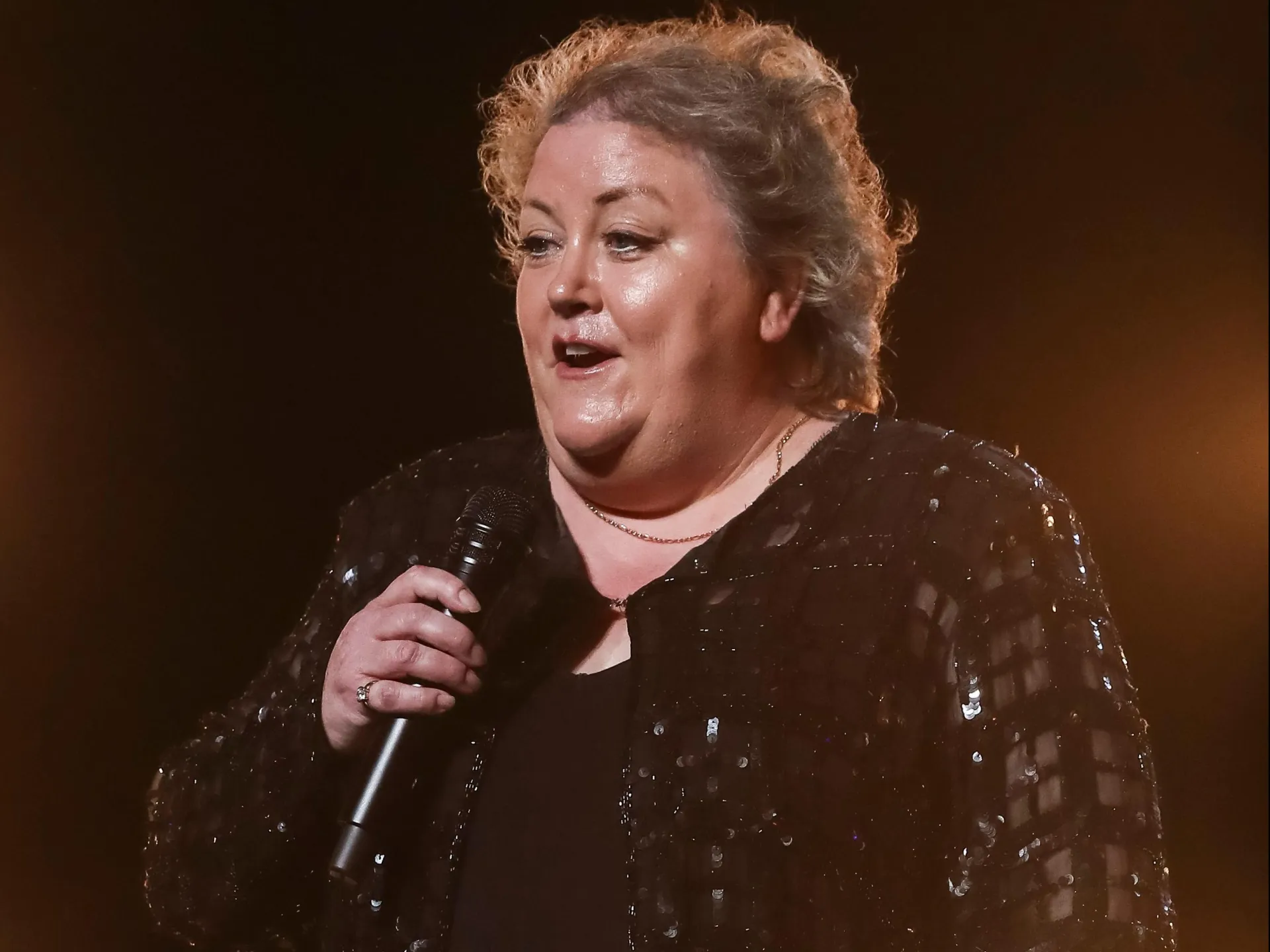
When Jacqueline Faye walked onto the stage, there was a quiet confidence about her that suggested she knew exactly what she wanted to do: sing. She didn’t need bright theatrics or gimmicks; she had a song and a voice, and that was enough. Choosing “You’re My World,” the classic Cilla Black made famous decades ago, set a high bar — the tune is beloved and loaded with history — but Jacqueline approached it with reverence and a clear intent to make it her own. From the moment the first note left her lips, it was evident that she wasn’t trying to imitate; she was translating the song into her own emotional language.
The opening line landed like a soft but deliberate promise. Her voice held an old-fashioned warmth, the type that carries melodic lines with a rich, rounded tone, yet she also infused the phrasing with contemporary nuance. It was the combination of technique and empathy that made the performance feel alive: she sustained notes with control, but she also bent and colored them in ways that suggested someone speaking directly to a single, important listener. Judges and audience members shifted in their seats, drawn in by the intimacy of her delivery.
What made Jacqueline’s rendition particularly compelling was the way she balanced power with restraint. There were moments when she soared — long, bright notes that filled the room and showed a formidable upper register — but she always chose those moments deliberately. Between those high points were softer passages where she let the melody breathe, using a hushed tone or a delicate vibrato to underline vulnerability. Those quieter moments were just as telling as the big notes because they revealed texture and depth; you could almost feel the backstory behind each phrase, the memories or desires that gave the song its meaning for her.
Small touches elevated the performance from excellent to unforgettable. She used subtle dynamics to create emotional arcs, pulling back at the end of a line just enough so the next phrase felt like a fresh revelation. Her diction was clear — each consonant and vowel articulated so the lyrics’ tender declarations sat right in the listener’s chest. Occasionally she would close her eyes, not as a self-indulgent gesture but as a signal that she was listening to the music from inside, letting the melody lead her rather than forcing it. Those little details made the audience feel included in something private and precious.
The musical arrangement supported her voice beautifully. The accompaniment was tasteful and uncluttered: a gentle piano foundation, warm strings that swelled at just the right moments, and a light rhythm section that never got in the way. The production choices emphasized the song’s timeless qualities while giving space for Jacqueline’s interpretation to breathe. Lighting played its part too, bathing the stage in soft golds and deep blues that shifted with the song’s mood, making the moment look as cinematic as it felt.
As the performance unfolded, the judges’ reactions became part of the story. Where panels often react in predictable patterns — polite nods, quick scribbles, rehearsed lines — here the response felt spontaneous. A judge known for rigorous critique sat forward, eyes wide, the posture of someone surprised and delighted. Another covered a hand to her mouth, the gesture of someone who’s feeling something unexpectedly personal. You could tell that, beyond technical assessment, they were listening as people: moved, impressed, and a little breathless.
Audience response followed the arc of the song. Early applause was tentative, as the room acclimated to Jacqueline’s unique take; but as she built toward the climactic moments, the murmurs quieted into rapt attention, and by the final lines the applause swelled into something wholehearted and prolonged. People rose to their feet not just because the notes were impressive, but because the performance had touched them. Conversations you hear at the end of many auditions — compliments about range or potential — were replaced with a more specific admiration: that she had taken a classic and made listeners feel it anew.
There’s an emotional economy to singing a familiar standard: too much imitation renders a performance redundant, too much reworking risks losing the song’s essence. Jacqueline found the sweet spot. She showed respect for Cilla Black’s original warmth while injecting her own timbral colors and phrasing choices, so the result felt both nostalgic and fresh. That balance is rare and precious; it’s the kind of interpretive maturity you might expect from someone with years of focused study or a deep, lived relationship with music.
By the time she reached the final note, the silence that followed was reverent — the kind of pause that acknowledges something meaningful has occurred. Then the response poured out: cheers, standing ovation, and faces in the crowd wet with emotion. In interviews and social feeds afterward, viewers would replay clips and point to specific moments — the way she held the last phrase, the tenderness on her face during a soft bridge — as proof that a truly great performance is more than technical prowess. It’s presence, honesty, and the willingness to open oneself in front of strangers.
Jacqueline Faye’s performance of “You’re My World” was one of those rare auditions that stays with you. It reminded everyone in the room, and later many more online, that a classic song can be reborn when an artist sings it with conviction and heart. Whether you came for powerful vocals or soulful interpretation, you left with the same feeling: you had witnessed something beautiful, timeless, and undeniably human.