
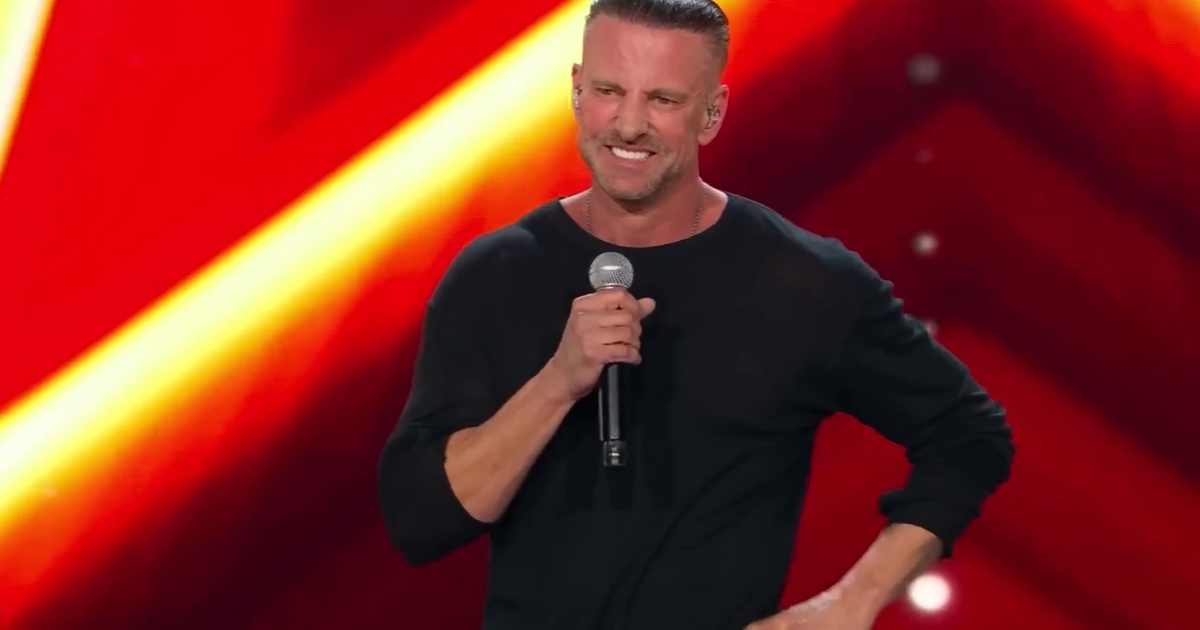
When Daniel Powter stepped onto the Canada’s Got Talent stage, he surprised everyone with an announcement: he wasn’t going to sing a cover or play someone else’s song—he would perform an original. That alone raised a few eyebrows. Talent-show panels are used to hearing familiar tunes; an unfamiliar piece is a riskier proposition, one that can fall flat if the audience and judges have nothing to latch onto. The judges watched with polite curiosity, pens poised and faces that mixed interest with the slight wariness reserved for the unknown. Daniel, however, carried himself with a calm, quiet confidence. He sat at the piano as if returning to an old friend and gave a reassuring nod before placing his fingers on the keys.
Then the opening chords began, and recognition spread like wildfire. The melody unfurled—familiar, singable, immediately evocative—and within seconds a murmur rippled through the crowd. People who had been cautious a beat before were now smiling, some mouthing the words. By the first chorus, many in the audience were singing along. The collective voice in the room transformed the audition from a solitary performance into a communal moment; it was as if the theater itself remembered the song and was eager to be reminded.
For the judges, the change was immediate and visible. Skepticism melted into dawning realization: they recognized the tune, the phrasing, the hook. Expressions shifted from neutral assessment to delighted surprise. A few leaned forward, eyes brightening as memory clicked into place. This was not merely an unknown original—it was “Bad Day,” the chart-topping hit that had been the soundtrack to commercials, radio drives, and personal playlists around the world. The irony—that he’d billed it as original only to play a song everyone essentially already owned—added a playful twist to the moment, and it deepened rather than diminished the audience’s affection.
What followed was less about novelty and more about connection. Daniel’s voice, warm and seasoned by years on the road, slid effortlessly over the melody. He didn’t try to reinvent the song so much as inhabit it anew; small phrasing choices, little dynamic shifts, and the honest timbre of a performer who knows how to inhabit a lyric all made the rendition feel fresh. The piano accompaniment was intimate but full-bodied, filling the space without overpowering the room. At the bridge, when the lyrics lean into empathy and uplift, the theater responded with an audible swell: hands clapped in rhythm, a few people rose instinctively, and the chorus became a joined refrain.
There was a distinct sense of homecoming in the air. For many in the audience, hearing “Bad Day” live resurfaced memories—long drives, difficult days turned bearable, radio singalongs. That personal nostalgia combined with the live context to create a powerful emotional cocktail: smiles mixed with teary eyes, laughter bordering on relief. The judges, who had been positioned to critique, found themselves swept into something else entirely—a reminder that music’s primary purpose is to connect and console. Their faces softened; their critiques were delayed by the sheer enjoyment of being part of the room’s collective response.
When the last note faded, the reaction was thunderous. The initial applause swelled into a standing ovation that filled the studio and spilled into the aisles. Judges rose from their seats, clapping and cheering alongside the audience. Some reached for microphones to shout praise; others wiped at their eyes, moved by the simplicity and sincerity of the moment. Daniel stood, slightly humbled, smiling broadly as he took in the warmth. He thanked the crowd with quiet gratitude, his voice threaded with emotion, acknowledging both the fans who had supported the song over the years and the new faces experiencing it live for the first time.
That reception transformed the audition into a kind of triumphant return. It was a reminder that even seasoned artists can surprise a platform like a national talent show—and that familiarity doesn’t negate artistry. If anything, revisiting a beloved song in a stripped-back setting allowed listeners to appreciate its craftsmanship and the performer’s interpretive gifts anew. For Daniel, this felt like a successful homecoming: a chance to reconnect with fans, to show that a hit can still thrill in an intimate, unvarnished performance, and to remind everyone that good songs age well when delivered honestly.
When the judges offered their final words, praise was abundant and sincere. They spoke not only about his vocal ability but about the joy he’d brought to the room, the communal singalong, and the way a familiar melody rekindled shared memories. The standing ovation lingered as Daniel exited the stage—an affirmation that, sometimes, the most powerful auditions aren’t those that shock with novelty but those that reaffirm what great music can do: bring people together, lift spirits, and leave a lasting impression.