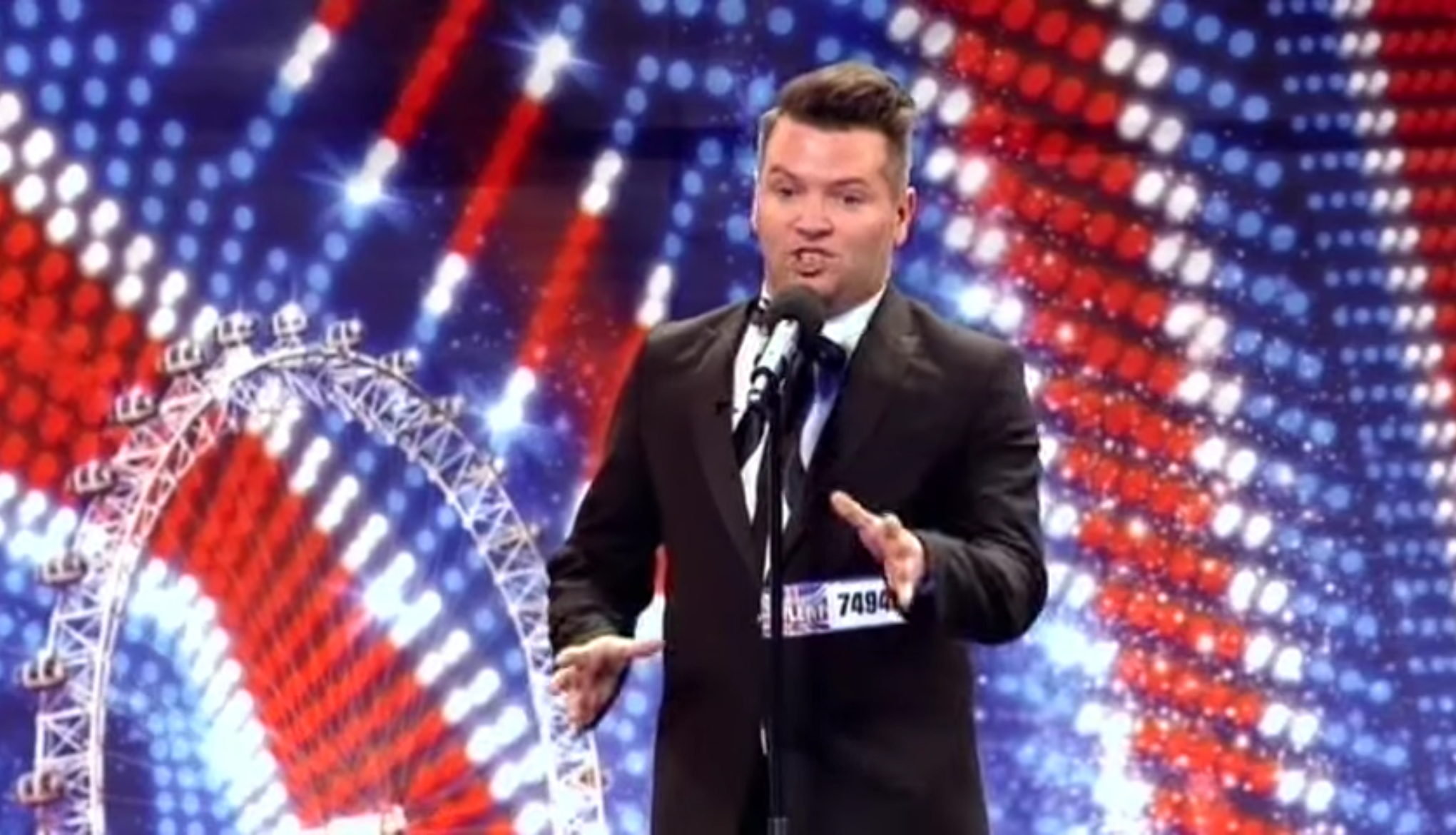
Thirty-five-year-old Edward Reid walked onto the Britain’s Got Talent stage with a warm, self-effacing grin that immediately made you like him. A drama teacher from Coatbridge, he began by describing his day job with a mix of affection and gentle mockery: he ran elderly drama groups — affectionately nicknamed the “Nifty 50s” — and worked with people with special needs. He talked about the little triumphs and comic mishaps that come with community theatre: a shaky prop that somehow becomes part of the scene, or a line delivered with such sincerity it becomes the show’s funniest moment. That background set the tone for his audition: he clearly loved what he did, and he loved the people he worked with. Yet despite his theatrical résumé, Edward admitted to the judges that he felt tiny in front of the television audience. He confessed, with a chuckle, that his slightly cheesy dream was to one day have “an audience with Edward Reid” and perhaps perform for the Queen. It was charmingly earnest — the sort of ambition that felt big in an everyman way.
He also made no secret of how intimidated he was by the bright lights and the packed auditorium. After years of coaxing performances out of nervous amateurs and elderly cast members, Edward was suddenly the one under the microscope. You could see his hands fidget a touch, and his voice held a nervous edge as he introduced himself. That tension made what came next all the more disarming.
Rather than take the predictable route — a stirring ballad or a carefully calibrated showpiece — Edward did something bold and utterly unexpected. He launched into a medley of nursery rhymes, but not as nursery rhymes are usually performed. Instead of lighthearted chirps and playful gestures, he treated each simple melody as if it were a heavy dramatic aria. “Old MacDonald Had a Farm” emerged like a tragic soliloquy; “Humpty Dumpty” became a Shakespearean lament. He transformed simple children’s ditties into operatic declarations, infusing each line with such exaggerated seriousness that the audience had no choice but to laugh and marvel in equal measure.
The performance was a study in theatrical contrast. Where the songs themselves are short and straightforward, Edward stretched them into mini-dramas, using dynamic shifts, deliberate pauses, and a voice that moved effortlessly from conversational hum to booming vibrato. He adopted the physicality of a classical singer — hands lifted, chest expanded, a face that slowly registered increasing anguish — as if the fate of the farm or a fallen egg depended on his interpretation. The staging was equally theatrical: a single spotlight here, a mournful pause there, a theatrical gasp delivered with comic timing. It was as much a piece of comedic theatre as it was a musical display.
The audience reaction was instantaneous and joyous. Laughter rippled through the auditorium, but it was the kind of laughter that comes from being delighted, not mocked. People were laughing with him, appreciating the cleverness of the reimagining. Judges who had seen countless acts that day leaned forward, their amusement plain on their faces. Louis Walsh, unable to contain his surprise, joked that no one had seen that coming and quipped that Edward might be perfect for Elton John’s child’s birthday party. Amanda Holden, grinning ear to ear, went further: she said she “would so buy your album,” as if the novelty-cabaret meets opera concept were suddenly a marketable record. David Hasselhoff praised Edward’s creativity and comic timing, noting that the act wasn’t just funny but genuinely inventive.
What made the audition work so well was the balance between comic performance and real musical ability. Under the cheeky concept was a properly trained voice; Edward’s technique allowed him to sustain long phrases and nail operatic colorations without ever sounding like a parody singer. That credibility let the humour land more effectively — audiences could enjoy the absurdity while still being impressed by the vocal control. It’s a tricky line to walk, and Edward did it confidently: the humor felt affectionate rather than derisive, and the musicianship gave the gag staying power.
There were small, human moments that punctuated the routine and made it feel warm rather than merely jokey. At one point he paused after a particularly solemn line, offering a sheepish smile to the crowd as if surprised by his own theatrical excess. The judges’ laughter softened into applause, and you could tell they admired him for taking such a risk and pulling it off. The finale — a deliberately overwrought final phrase that combined all the nursery rhymes into one operatic crescendo — drew a standing ovation. People clapped not just to acknowledge a funny audition but to celebrate a clever, heartwarming piece of entertainment.
When the votes were announced, Edward received four unanimous “yeses,” a deserved green light to continue. He left the stage having done something rare: turned a simple, homespun idea into a polished, memorable performance that celebrated community theatre, genuine talent, and a healthy sense of fun. For a drama teacher used to coaxing magic from amateur casts, the moment felt like a little vindication — a reminder that a good idea, delivered with heart and skill, can win over even the most seasoned of judges and a whole studio full of skeptical strangers.