
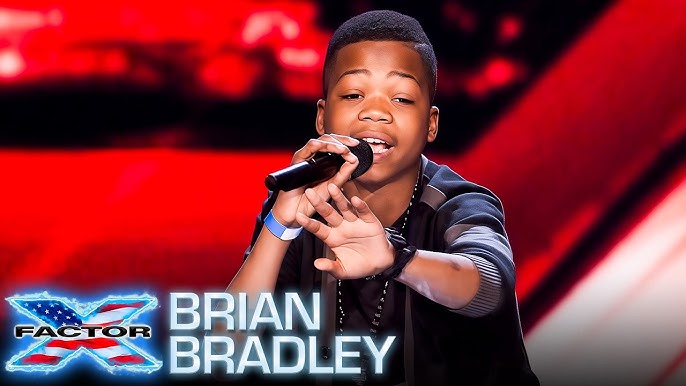
The moment he walked onto the stage, there was something quietly arresting about him — not a flashy entrance or a rehearsed wink to the cameras, but a calm confidence that felt far beyond his fourteen years. He was small in stature, sleeves rolled up a little from nervous habit, sneakers scuffed from whatever neighborhood he came from, yet he moved with a purpose that made people look up. You could tell he’d thought carefully about his song choice; he wasn’t trying to shock anyone with theatrics. Instead he picked a number that seemed designed to reveal rather than hide what he could do — a bold choice for someone so young.
When the first notes came, it felt as if the whole room leaned in. His voice unfurled with a clarity that made you forget to breathe for a beat. It wasn’t just that the pitch was right or that he hit the right timbre; it was the way he inhabited the lyrics, bending them with phrasing and emotion that suggested lived experience, or at least a deep empathy for the story in the song. There was a maturity to his tone that made judges exchange surprised looks. They were used to teenagers who could warble a melody or copy a trend, but this kid dug into the song — he let it sit in his chest and then pushed it out with conviction.
Small details made the performance feel genuine rather than manufactured. He didn’t rely on over-singing or dramatic flourishes; instead he used breath control and tiny inflections — a deliberate pause before a vulnerable line, a slight rasp on a word that needed weight — to hold the room’s attention. When he hit a high note, it wasn’t showy so much as inevitable, the logical arrival point of everything he’d been building. You could see people in the audience reacting: a hand over a mouth in disbelief here, a woman wiping her eyes there, teens instinctively recording on their phones as though they knew they were witnessing something rare.
As the performance progressed, the energy in the theater shifted from polite curiosity to wholehearted wonder. At first, a few murmurs of “Wow” and tentative clapping rose from the crowd; later, cheers broke out between phrases. The judges, who had politely prepared their critique pens for the usual mix of nerves and potential, slowly lowered their guard. One judge’s eyebrows arched in recognition of technique; another’s smile softened, visibly moved by the emotional undercurrent of the delivery. There was a moment midway through the song when the lighting dropped and his voice seemed to hang in the air, resonant and pure. For a second, time felt elongated — not because the performance was slow, but because it commanded such attention that everyone wanted to savor it.
The reaction wasn’t limited to the live audience. As soon as the clip hit social feeds, commentators and music lovers began dissecting what made the performance so special. People pointed to his phrasing, his choice of dynamics, the way he conveyed vulnerability without resorting to cliché. Music educators and producers chimed in, noting that his technique — the way he controlled breath, supported notes, and shaped consonants — suggested someone who either had a natural aptitude or had spent more time practicing than most adults would suspect. Either way, the consensus was clear: there was real, measurable talent there.
By the time he reached the ending, the applause felt less like a polite send-off and more like an acknowledgment of a new presence in the music world. The final chord hung for a beat, long enough for the audience to catch its collective breath, then the room erupted in standing ovation. Judges who had been reserved moments earlier leaned forward with genuine enthusiasm, asking pointed, encouraging questions afterward rather than offering the usual scripted critiques. Words like “intangibles,” “star quality,” and “career potential” came up in conversation backstage and on-air as analysts speculated about what the future might hold for him.
There’s something particularly compelling about young performers who seem to arrive fully formed. It forces you to consider what kind of young life could create such depth of expression — whether he’d grown up singing in church basements, pouring over old records with a parent, or practicing into a mirror for hours on end. Whatever the backstory, the effect was the same: a teenager who transformed a routine audition into a season-defining moment. Talent shows are littered with memorable auditions, but the ones that stick are those that shift expectations and make viewers re-evaluate what youth and raw potential can look like.
Industry insiders weren’t shy about predicting a bright future. Producers imagined him in showcases and opening slots, vocal coaches visualized further technical refinement, and talent managers calculated the right next steps to nurture and protect his voice. Yet for all the talk of careers and contracts, the most human reaction came from ordinary viewers who felt touched by the sincerity of the performance. Parents messaged about how moved they were to see a young person pouring so much heart into something, young singers said they felt inspired, and older listeners admired the grit and emotion.
In the end, the audition did more than win applause; it went viral and became a marker of promise. For a fourteen-year-old to command a stage like that is rare, and the ripple effect — from social media buzz to industry interest — only confirmed what the audience felt in that theater: they had just seen the beginning of someone special. Whether he becomes a household name or a respected artist in the years to come, that night will always stand out as the moment he announced himself to the world.