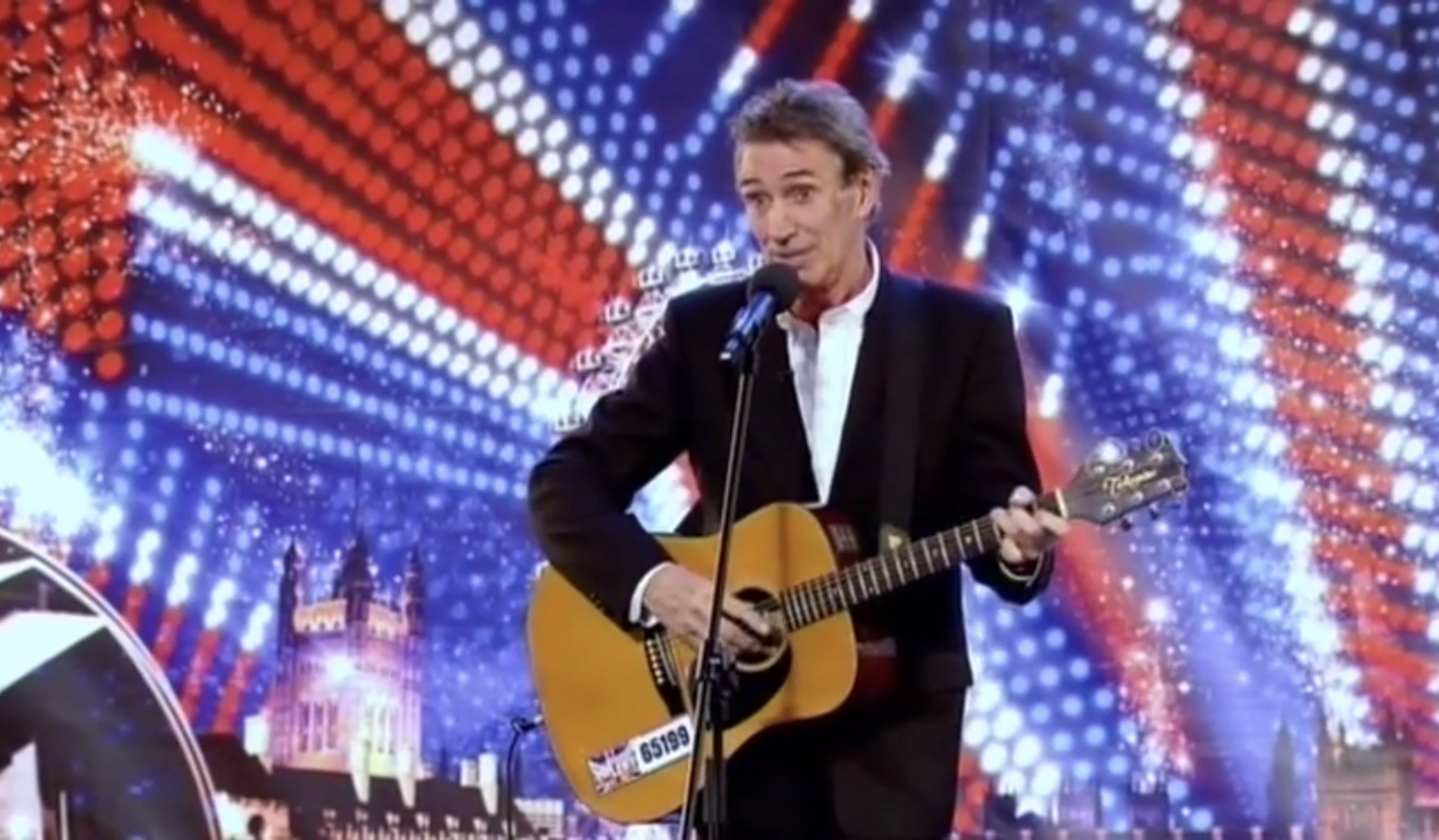
Herbie Armstrong’s audition on Britain’s Got Talent was the kind of moment that reminded everyone watching that it’s never too late to pursue a dream. At 66, Herbie carried with him a lifetime of music that most viewers had never heard: decades spent as a session guitar player, the kind of musician who lives in the margins of fame, helping other artists shine while remaining largely invisible himself. He told the judges — and the audience — that after years behind the scenes and a long spell running a bar and restaurant, he had decided this was his “last shot” to step out from the shadows and perform as Herbie, not as someone else’s sideman. There was a quiet urgency in his voice as he explained why he’d finally chosen to take that leap, a mix of regret at lost chances and the hopeful determination of a person who still believes in what he can offer.
When he first started, Herbie didn’t pull out a familiar cover. Instead, he chose to present an original song, something personal that he had written in his own voice. That decision showed courage; originals are risky on a big television stage because the audience doesn’t have the comfort of recognition. He played with a steady, practiced hand, and you could tell from the way his fingers found the frets that this was a man who had lived in the company of instruments for years. But while the judges respected his songwriting and his musicality, they gently pointed out that the first song didn’t quite reveal the full breadth of his vocal presence. It felt like a glimpse rather than a full portrait.
In a move that felt almost tender, the panel asked if he had a second song — something the audience might already know, something that could connect immediately. Herbie nodded, looked down for a beat as if weighing his options, and then smiled before introducing his next selection: a soulful take on the classic “Have I Told You Lately That I Love You.” The change was immediate. As soon as the opening chords rang out, the room seemed to lean in. That song, familiar and warm, acted like a bridge between Herbie’s long career and the people watching him for the first time. He didn’t try to reinvent the tune; instead, he infused it with what one judge later called “Celtic soul” — a raspy, weathered tone wrapped in heartfelt phrasing that made every word feel earned.
There were small details in the performance that made it memorable. He closed his eyes at certain lines, letting the melody carry him back to decades of playing in clubs and studios. His voice creaked in the best possible way on the higher notes, a texture that suggested both lived experience and resilience. When he hit the more emotional passages, you could see a flicker of vulnerability cross his face, a humanizing glimpse behind the stage persona. The audience responded not just with polite applause but with a warmth that swelled into real appreciation; some people were visibly moved, and the judges’ faces shifted from polite curiosity to genuine admiration.
The judges’ feedback captured the arc of the audition. Louis Walsh spoke first about Herbie’s tone, calling it incredible — a recognition that after a lifetime honing his craft, Herbie finally sounded like he belonged in the spotlight. Michael McIntyre joked lightly at first, then pointed out that Herbie had both the name and the style of someone who could be a star. Those comments landed differently because they felt earned: this was not a fluke of good timing or clever production. It was the culmination of a lifetime spent practicing chords in the dark, learning how to coax feeling out of a string. Even the more critical notes were framed kindly, as if the judges were letting someone they liked know how to get from a great performance to a truly unforgettable one.
When the votes came, Herbie received three enthusiastic “yes” votes. The reaction felt, appropriately, like a small coronation for a man who had spent years supporting other people’s triumphs. For him, it wasn’t merely about advancing in a competition; it was proof that his voice — and his story — mattered to strangers in the audience and millions more watching at home. There was a humility in the way he accepted the praise, a soft nod rather than an overt celebration, that suggested he knew how much work still lay ahead but also that this moment represented something precious.
Beyond the immediate judges’ room triumph, Herbie’s audition resonated because it struck a universal chord: the idea that talent doesn’t have an expiration date. So many of his details — the bar and restaurant he ran, the studio sessions where he backed other artists, the nights when he played to empty rooms — made his public success feel grounded and authentic. For viewers, his story offered a reminder that careers can take strange detours and that passion can sit dormant for years before being rekindled. Sometimes all it takes is one brave evening, one decision to step forward, to convert a lifetime of background work into a moment at center stage.
Herbie left the stage not transformed into overnight fame, but changed in a quieter, more meaningful way: acknowledged. That validation matters. It’s the kind of thing that can give momentum to someone who has spent most of his life helping others look and sound good. His audition was a small triumph for anyone who’s ever delayed their dreams, and for those who still believe that putting yourself out there — even late in the game — can finally yield the recognition you deserve.