I’d stopped expecting anything from strangers a long time ago.
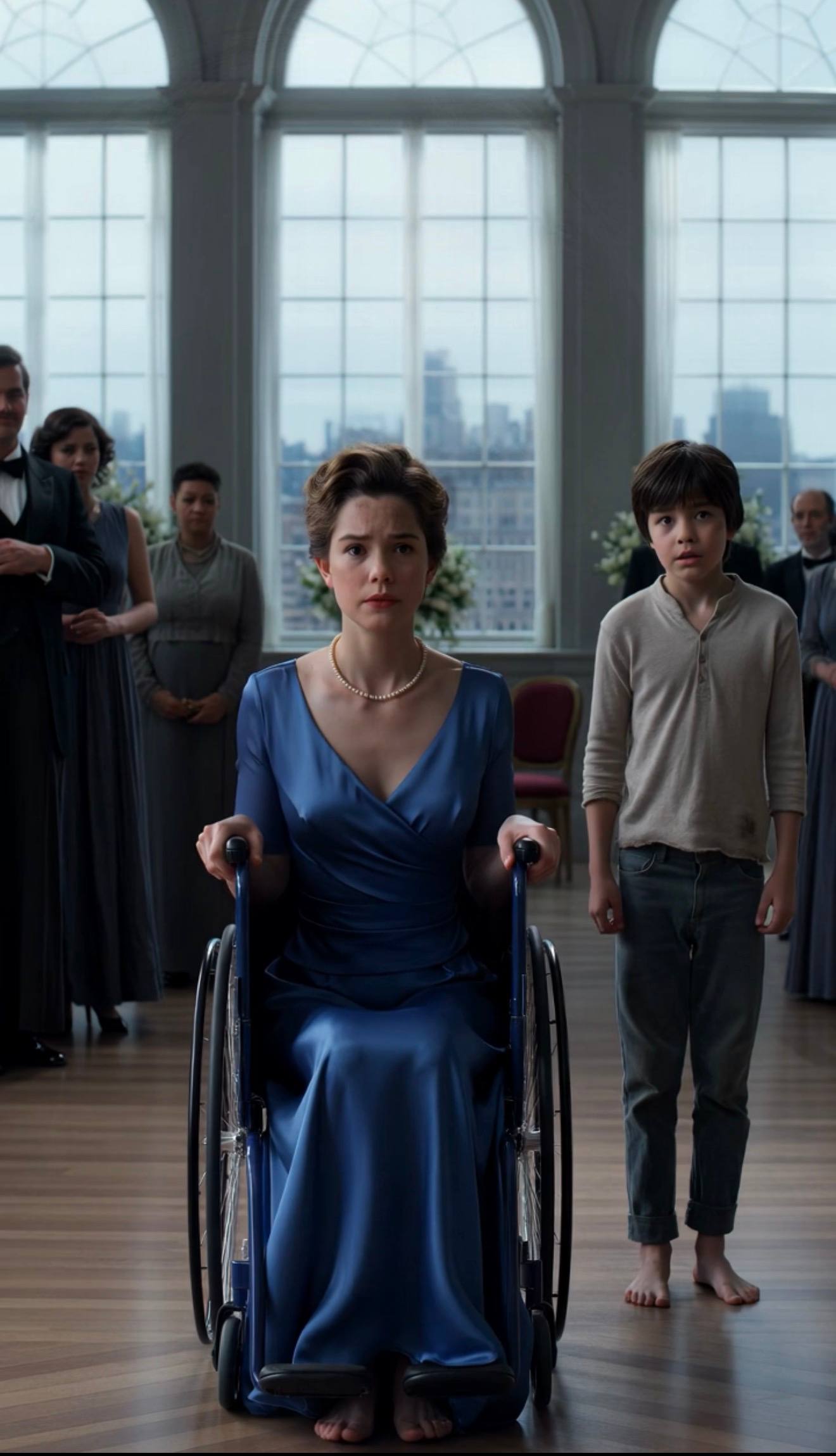
Six years in this chair teaches you that people either stare or look away — there’s rarely an in-between. So when the barefoot boy approached me at my own charity gala, dirt on his face, scrapes on his hands, I assumed he was lost.
“Are you lost, sweetheart?” I asked.
He smiled — not a child’s smile, but something older, steadier. “No,” he said. “I came for you.”
I blinked. “What do you mean?”
Around us, I could feel the party slowing, guests turning, champagne glasses pausing mid-air.
“My mom used to say some people just forget they can stand,” the boy said, stepping closer. “Count to three.”
Before I could ask what he meant, his small, dirt-streaked hand settled over mine on the armrest.
I should have pulled away. Every instinct told me to call security, to laugh this off, to do anything except let a strange child touch me in front of three hundred guests.
Instead, I found myself gripping the armrests.
“One,” he whispered.
My heart started pounding.
Continued in the c0mments 👇
“Two,” the boy whispered, and something in his voice made the six years since my accident feel suddenly very far away.
I want to explain what those six years had been like, but I’m not sure words do it justice. The car accident that took the use of my legs. The endless rehabilitation that yielded nothing. The specialists who eventually stopped scheduling follow-ups because there was nothing left to measure. The slow, quiet acceptance that this — the chair, the dependence, the careful architecture of a life rebuilt around limitation — was simply who I was now.
I had made peace with it. Or told myself I had.
“Three,” the boy said.
And I pushed.
I don’t know how to describe the sensation of muscles moving that haven’t moved deliberately in six years. It wasn’t graceful. It wasn’t instant. My arms shook, my core strained, and for one terrifying moment I thought I might simply fall forward onto the marble floor in front of everyone I’d spent the evening trying to impress.
But I didn’t fall.
I rose.
Slowly, unsteadily, gripping the boy’s small shoulder for balance more than support, I felt my legs — my legs, which I had genuinely believed would never bear weight again — hold me upright.
The blanket that had covered my lap for six years slipped to the floor, forgotten.
Someone in the crowd gasped. I heard glass shatter somewhere, a dropped champagne flute, but it barely registered. All I could feel was the impossible, solid ground beneath feet I hadn’t stood on since I was thirty-four years old.
“Oh my god,” I whispered, and then I said it again, louder, because I needed to hear it out loud to believe it. “Oh my god.”
The boy stayed close, steady, watching me with an expression far too calm for what had just happened.
“How,” I managed. “How did you know I could—”
“You always could,” he said simply. “You just needed someone to remind you your legs still knew how.”
I looked down at him — this small, filthy, barefoot child who had walked uninvited into the most important event of my social calendar and undone six years of resignation in the span of three whispered numbers.
“Who are you?” I asked. “How do you know things like this?”
He shrugged, the way children do when a question feels bigger than they want to answer. “My mom taught me. She used to help people who forgot things about themselves.”
“Where is your mother now?”
Something flickered across his face — the first crack in his composure all night. “She’s not around anymore,” he said quietly. “But she said I’d know who needed help. She said I’d just know.”
I didn’t know what to say to that. I was standing — actually standing, on my own legs, in my own body, for the first time in six years — and the boy who had made it happen was talking about his mother in the past tense with the kind of practiced steadiness that told me this wasn’t the first time he’d had to explain her absence.
“Stay,” I said suddenly. “Please. Let me help you the way you just helped me.”
He looked up at me for a long moment, something unreadable in his eyes. Then, slowly, he nodded.
Security finally arrived — three guards, uncertain how to handle a situation that defied every protocol they’d been trained for — but I waved them off.
“He’s with me,” I said, my voice stronger than it had been in years. “He’s staying with me.”
I don’t know yet what that will mean, logistically, legally, practically. I don’t know his last name or where he’s been sleeping or how many other people he’s quietly helped stand back up in ways both literal and otherwise.
But I know that six years of sitting taught me things about waiting, about hoping, about the particular grief of a body that won’t cooperate with your will.
And I know that one barefoot boy, three whispered numbers, and the steady weight of his hand on mine undid all of it in under a minute.
I am standing at my own window right now as I write this, looking out over the city lights, on legs I thought I’d never trust again.
Some people just forget they can stand.
I won’t forget again.