
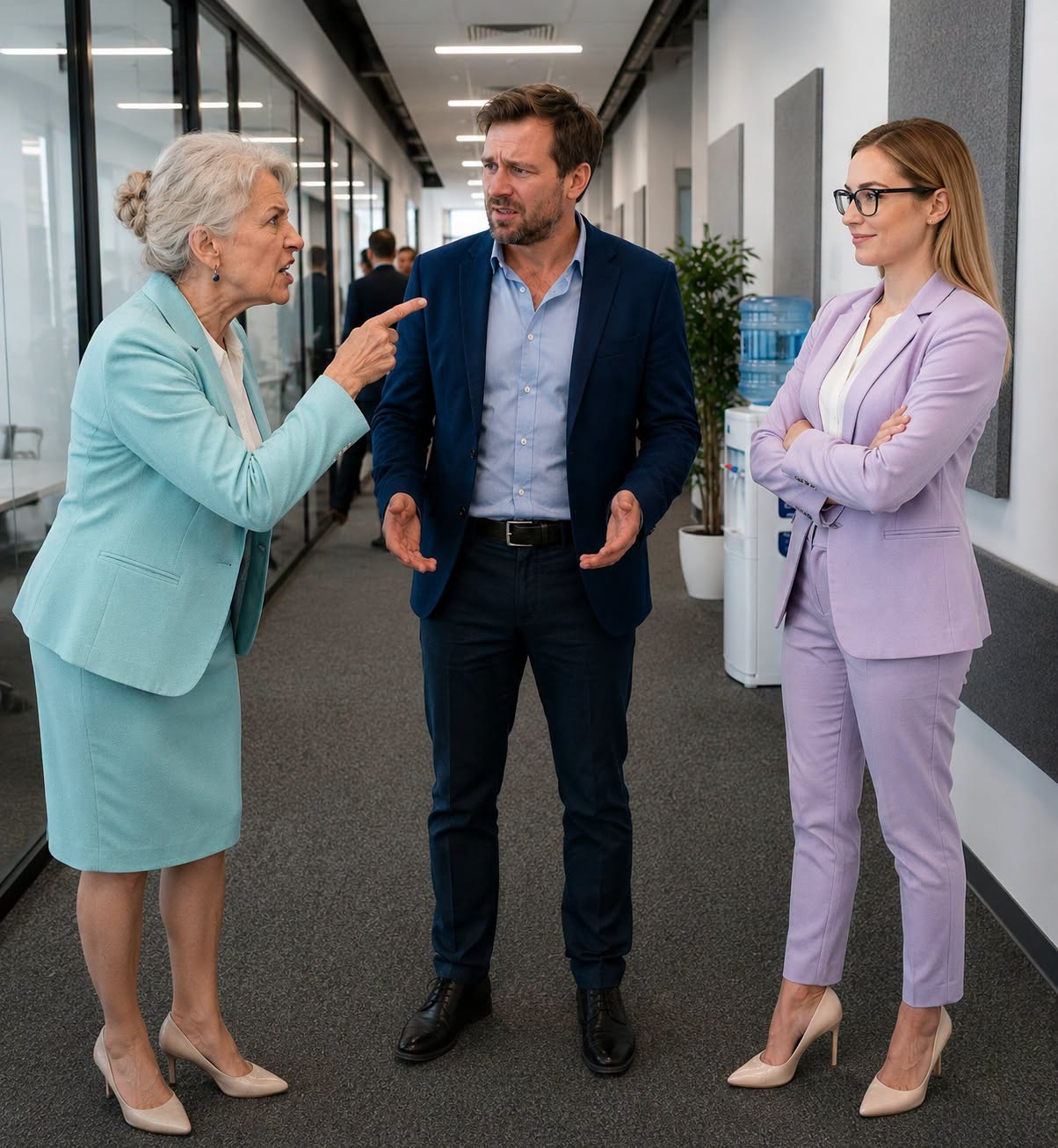
“Get divorced and give half the business to my son!” declared the candle, unknown to the daughter-in-law, who was a divorce lawyer.
Victoria Sergeevna always told her clients: “Divorce isn’t about emotions, it’s about arithmetic. The one who is better prepared is the one to blame.”
In fifteen years of working as a family lawyer, she has handled two hundred and sixteen divorce cases. She learned to recognize a fraud from the very first minute of a consultation, to check hidden assets by their outward appearance, and to divide assets in a way that left the other side in complete dismay.
Her signature phrase was cold: “Emotions aside, we’ll stick to the facts.”
Clients adored her.
Opponents hated her.
But no one could find fault: Victoria played strictly by the law; she simply knew it better than anyone.
She couldn’t even imagine that one day she herself would appear on the other side of the fence where her sobbing clients usually sat, handkerchiefs in hand.
It all started on an ordinary Monday. Victoria had returned from court—she had won another case, awarding her client three-quarters of their jointly acquired property (her husband had hidden the money in offshore accounts, but she had found all the chains). She was in high spirits. She opened the door to her apartment and heard voices in the kitchen.
“Andrey, you have to insist!” It was the voice of Tamara Fyodorovna’s candle. “She MUST give you half. You’ve been by her side for three years, putting up with her temper, her support!”
“Mom, I don’t know…” her husband, Andrey, mumbled.
Victoria kicked off her shoes and walked quietly into the kitchen. The door was ajar. She stood against the wall and listened.
“What, you ‘don’t know’!” Tamara Fyodorovna fumed. “She’s a lawyer, she has her own firm! Do you know how much she makes? I gave you a hint: last month alone, she handled three divorces, each with at least three hundred thousand in fees! That’s over a million a month! And what do you make? Forty thousand in salary at your own firm!”
“So what?” Andrey clearly didn’t understand what his mother was getting at.
“Of course!” Tamara Fyodorovna lowered her voice to a conspiratorial whisper, but Victoria still heard every word. “Divorce her, and by law, you’ll get half the business! She opened the firm during the marriage! So it’s marital property! You’ll become a co-owner of the law firm! You’ll receive dividends without doing anything!” Continued comments
Victoria Sergeevna always told her clients: “Divorce isn’t about emotions, it’s about arithmetic. The best-prepared person wins.”
In her fifteen years as a family lawyer, she has handled two hundred and sixteen divorce cases. She learned to recognize lies from the very first minute of a consultation, identify hidden assets based on circumstantial evidence, and divide property in a way that leaves the other party in awe.
Her signature phrase was cold: “Let’s put emotions aside and work with the facts.”

- Her clients adored her.
Her opponents hated her.But no one could find fault: Victoria played strictly by the law; she simply knew it better than anyone.
She couldn’t have imagined that one day she would find herself on the other side of the fence, where her sobbing clients usually sat, handkerchiefs in hand.
It all started on an ordinary Monday. Victoria had returned from court—she had won another case, awarding her client three-quarters of their jointly acquired property (her husband had hidden the money in offshore accounts, but she had found all the chains). She was in high spirits. She opened the door to her apartment and heard voices in the kitchen.
“Andrey, you have to insist!” It was the voice of her mother-in-law, Tamara Fyodorovna. “She MUST give you half. You’ve been there for three years, putting up with her temper, supporting her!”
“Mom, I don’t know…” her husband, Andrey, mumbled.
Victoria kicked off her shoes and walked silently toward the kitchen. The door was ajar. She stood by the wall and listened.
“What, you ‘don’t know’!” Tamara Fyodorovna fumed. “She’s a lawyer, she has her own office! Do you know how much she earns? I checked: last month alone, I handled three divorces, each with a minimum fee of three hundred thousand! That’s over a million a month! And what do you earn? Forty thousand in salary at your own office!”
“So what?” Andrey clearly didn’t understand what his mother was getting at.
“Of course!” Tamara Fyodorovna lowered her voice to a conspiratorial whisper, but Victoria still heard every word. “Divorce her, and by law, you’ll get half the business! She opened the office during the marriage! So it’s joint property! You’ll become a co-owner of the law firm!” You’ll be collecting dividends without doing anything!
Victoria leaned against the wall. Her inner lawyer—the same one who had witnessed every conceivable form of human meanness over the years—smirked: “Well, Tamara Fyodorovna. You just made a classic mistake. You tried to deceive a divorce lawyer. In her own home. It’s like trying to pickpocket a pickpocket—technically possible, but extremely stupid.”
“Mom, but Vika’s not stupid,” Andrey countered hesitantly. “She’s a lawyer. She’ll think of something to get around me.”
“I’ve already thought of that!” her mother-in-law announced triumphantly. “I found a lawyer. Sergei Lvovich, my former colleague, now specializes in divorce. He said: if you prepare properly and gather evidence of your contribution to her business, the court will award you a share. The main thing is to file first, before she comes to her senses.
“Sergey Lvovich.” Victoria knew this “expert.” A C student who defended his case on his third try and took cases solely for the fee, without much regard for the outcome. She won cases against him without even breaking a sweat.
“But how will I prove my contribution?” Andrey still hesitated. “I didn’t work in her office.”
“But you were her husband!” Tamara Fyodorovna had clearly thought everything through down to the last detail. “You provided her with psychological support! You ran the household! That’s also a contribution!” Sergey Lvovich said there’s case law. The main thing is to make sure she doesn’t have time to transfer the assets. So we need to act quickly.
“What if she… well, gets offended?” Andrey squeaked pitifully.
“Andrey!” his mother barked. “Are you a man or a weakling?! She’s been riding on you for three years! You’re in her shadow! It’s time to take what’s yours! Get a divorce, get your money, find a normal wife who will appreciate you and not bully you!”
Victoria quietly turned and walked into the bedroom. She closed the door. She sat down on the bed. Her hands were completely still. Her heart beat steadily. Her inner lawyer methodically sorted the facts:
Fact 1: The husband and mother-in-law are planning a divorce in order to sue for half of the business.
Fact 2: They believe the law firm is jointly owned property.
Fact 3: They underestimate the enemy.
Victoria opened her laptop and went to the “Personal Documents” folder. Everything was stored there:
— Office lease agreement—drafted two months BEFORE the wedding. The date was clearly written in black and white.
— Sole proprietorship registration certificate—four months before the wedding.
— Initial contracts with clients—all BEFORE the marriage.
— Prenuptial agreement—yes, she insisted on it before the wedding. Andrey was offended at the time (“You don’t trust me?”), but she was adamant. It was clearly written in black and white: the business opened by each spouse is their personal property.
Victoria chuckled. They hadn’t even bothered to check for a prenuptial agreement. A classic amateur mistake.
But she wasn’t going to stop there. Because after fifteen years of work, she’d learned the most important thing: in a divorce, the one who strikes the first blow wins. And she’ll deal it out so hard that Tamara Fyodorovna and her “Sergey Lvovich” won’t even have time to react.
BACKGROUND
Victoria opened a law firm at twenty-eight. Prior to that, she worked for five years at a large law firm, where she was buried in routine work and paid pennies. She saved every bonus, refused vacations, and lived in a rented room. When she had saved enough, she quit and registered as a sole proprietor.
The first office was ten square meters in a basement, with one desk, a chair, and a laptop. Her first client was a friend of a friend, whose husband had abandoned her and their two children. Victoria won the case, winning alimony and half the apartment. The client told her friends, and others followed.
Two years later, Victoria moved into a proper office. A year later, she hired a secretary. The business grew. She specialized in complex divorces: business division, the search for hidden assets, and offshore schemes. Her services were expensive, but the results were worth it.
She met Andrey at a friends’ corporate party. He worked as a sales manager, charming, cheerful, and easy to talk to. After a stressful day with hysterical clients and cynical opponents, his simplicity seemed like a breath of fresh air.
Andrey admired her success:
“Vika, you’re so strong! I could never do that!”
She melted. She wanted to be not only a “robot lawyer,” but also just a woman. They started dating.
Before the wedding, Victoria proposed a prenuptial agreement. Andrey was offended:
“What, do you think I’m after your money?”
“Andrey, I’m a divorce lawyer. Every day I see how ‘love unto death’ turns into property division in court. Let’s just protect ourselves.”
“But that’s mistrust!”
– It’s common sense.
He sulked for a week, but eventually signed. Victoria remembered him signing it with the words, “You’re so paranoid, Vic. We love each other.”
Now, three years later, this “paranoid” turned out to be the only one who foresaw the future.
The first year of marriage was quite tolerable. Andrey really did “run the household”—that is, he took out the trash once a week and sometimes washed the dishes. Victoria worked twelve hours a day, earned money, paid for the apartment (she rented hers), groceries, and vacations. Andrey received his forty thousand rubles and spent it on personal needs: a new phone, meetings with friends, hobbies.
His mother-in-law rarely showed up. Tamara Fyodorovna was a retired teacher, living in her two-room apartment on the outskirts. At first, she behaved decently: she visited for holidays and gave symbolic gifts. Victoria even liked her.
The turning point came six months ago. Victoria won a high-profile case—dividing a millionaire’s property. Her fee was one and a half million rubles. Local media reported it: “Lawyer Victoria Sergeyevna awarded her client half of her ex-husband’s business.”
After that, Tamara Fyodorovna began visiting more often. And her questions became more specific:
“Vika, how much did you get for that case?”
“Vika, is it true you now have three assistants?”
“Vika, have you bought an apartment yet, or are you still renting?”
Victoria answered evasively. Her inner lawyer was already sounding the alarm: “She’s taking aim.”
Andrey began complaining more often:
“Vika, you’re always at work. We don’t even spend proper time together.”
“Andrey, I earn money. For both of us.”
“So what? Money isn’t the most important thing. The most important thing is the relationship.”
Classic. Victoria had heard this from hundreds of her clients’ husbands: “Money isn’t the most important thing.” Until it came to dividing property. Then, “not the most important thing” became the only thing they were willing to fight for to the bitter end.
PREPARATION
After the overheard conversation, Victoria didn’t make a scene. She followed a well-established pattern—as she did with clients.
Step 1: Gathering Evidence.
She installed a call recording app on her phone. It’s legal if one of the participants in the conversation (she) knows about the recording.
That evening, when her mother-in-law had left and Andrey was sitting in the living room, Victoria started the conversation:
“Andryusha, how long has your mother been coming over so often?”
“Well… she misses me. I’m my only son.”
“What did you talk about today?”
Andrey hesitated.
“Just little things. About life.”
“About my business?”
He blushed:
“Vika, Mom’s just curious…”
“What exactly?”
“Well… she asked how much you earn. I said I didn’t know exactly.”
“What else?”
“Vika, you’re interrogating me like I’m in court!” Andrey flared up. “Mom has a right to be interested in her son’s life!”
“She does,” Victoria agreed calmly. “I’m just wondering why she needs information about my income.”
The recording has been saved.
Step 2: Asset Check.
Victoria checked all joint accounts (there weren’t any – she insisted on separate finances), loans (none taken), and property (anything rented or premarital). The picture was crystal clear: there was nothing to divide. Except the business, which he wasn’t entitled to under the prenuptial agreement.
Step 3: Checking Contractors.
She made inquiries about “Sergey Lvovich.” Just as she’d expected: a mediocre lawyer with a dubious reputation. He’d won five out of twenty cases, and even those were out of court. It would be easy to fight him.
Step 4: Preparing Documents.
Victoria prepared a full package:
— Prenuptial agreement (original and copy).
— Business registration documents BEFORE the marriage.
— Bank statements (proof that she financed the family).
— Recordings of conversations.
Everything was sorted into folders, numbered, and certified. As she taught her clients: “A document without confirmation is an empty phrase.”
Step 5: Choosing the Moment.
Victoria didn’t wait for Andrey and his mother to file for divorce first. There’s an unspoken rule in divorce proceedings: whoever files first sets the tone.
She made an appointment with a judge she knew—not to settle the matter (that would have been illegal), but to consult on the procedure. She made sure everything was properly filed.
And she chose a day.
CLIMAX
On Saturday, Victoria invited Tamara Fyodorovna over:
“Tamara Fyodorovna, let’s get together and have a family dinner. I’ll roast a turkey.”
The mother-in-law was delighted. She assumed Victoria had no suspicions. She arrived in full dress—in her favorite suit and with a cake (purchased, but she passed it off as homemade).
At the table, Tamara Fyodorovna was pleasant:
“Vika, dear, how are you? How’s work?”
“Great,” Victoria smiled. “By the way, I have some news to share.”
“What news?” Andrey looked wary.
“I filed for divorce. The papers will be in court on Monday.”
Silence.
Tamara Fyodorovna choked on her cake. Andrey dropped his fork.
“You… what?” he choked out.
“I’m divorcing you, Andrey,” Victoria repeated calmly. “Because of loss of trust and incompatibility.”
“But… but why?!” Andrey feigned shock. He feigned it poorly—Victoria could see the phoniness a mile away.
“Because I overheard your conversation with Mom,” Victoria said, pulling out her phone. “Here’s the recording. Want to listen?”
She turned it on. Tamara Fyodorovna’s voice, clear and loud: “Divorce her, and by law, you’ll get half the business!”
Her mother-in-law turned pale. Andrey opened his mouth, but found no words.
“So,” Victoria continued, “to save you the trouble, I filed it first. And I’ll explain right away why your plan failed.”
She placed the folder on the table.
“First: a prenuptial agreement. Remember, Andrey, how you called me paranoid? Here it is. Point three: a business created by either spouse before or during the marriage is considered personal property. You signed it. It’s impossible to challenge.”
“But…” Tamara Fyodorovna tried to intervene.
“Second,” Victoria ignored her. “My business was registered FOUR MONTHS before the wedding. Here’s the certificate of registration as an individual entrepreneur. Date. Seal. Even if there hadn’t been a prenuptial agreement, the business would still have been considered prenuptial property.”
“Third: I received all my income into a personal account opened before the marriage. No joint investments. Andrey, have you ever paid office rent? Your secretary’s salary? Advertising? No. You didn’t even buy stationery.”
Andrey remained silent, staring at his plate.
“Fourth,” Victoria was merciless. “You and your mother were counting on ‘Sergey Lvovich.’ I made inquiries. Out of twenty cases, he won five. He hasn’t won a single one against me. The last time we met in court was six months ago—I won a client’s apartment, car, and business. He couldn’t even formulate a proper response.”
Tamara Fyodorovna jumped up:
“You… you orchestrated the whole thing! You eavesdropped on it on purpose!”
“Eavesdropped in my own apartment on a conversation about how they were going to deceive me? Yes, I eavesdropped. And I recorded it. Legally, by the way—I was a party to the conversation.”
“Vika, wait,” Andrey tried to pull himself together. “Let’s discuss it. We can resolve this peacefully…”
“We can,” Victoria nodded. “Here’s the settlement agreement.”
She pulled out another document:
“Divorce without division of property, since there’s nothing to divide. The apartment is rented. The car is mine, bought before the marriage. The furniture is mine too—here are the receipts. You take your personal belongings and move out within a week. We don’t pay each other child support, and we have no claims. Sign.”
“And if I don’t sign?” Andrey tried to feign firmness.
“Then we’ll go to court. I’ll present all the records, all the documents. Plus, I’ll file a counterclaim for reimbursement of your maintenance expenses for three years of marriage. I calculated: apartment, food, vacations, your personal expenses—around two million. Legally, I can demand compensation. The court, of course, won’t award everything, but thirty percent, easily.”
Andrey cringed.
“So, choose,” Victoria leaned back in her chair. “You sign the settlement and leave with nothing.” Or we go to court, and you leave with a debt.
Tamara Fyodorovna choked with rage:
—You… you’re heartless! Cold! Andrey wasted three years of his life on you!
— “Spent,” Victoria repeated. “Interesting verb. Do you want the numbers for how much I ‘spent’ on Andrey? Here you go.”
She took out a calculator and began reading:
—Rent: six hundred thousand for three years. Utilities: one hundred twenty thousand. Grocery: four hundred thousand. Vacations (Turkey, Egypt, Sochi): three hundred thousand. His personal expenses (phone, clothing, entertainment): another three hundred thousand. Total: one million seven hundred twenty thousand rubles.
She looked at her mother-in-law:
—Do you want him to compensate me at least half? Or did he really ‘spent’ on me, and not the other way around?
Tamara Fyodorovna opened her mouth and closed it. There was no argument to be had. “That’s it,” Victoria stood up. “This conversation is over. Andrey, the documents are on the table. If you sign them, take them to the notary, have them certified, and hand them to me. If you don’t sign them, I’ll see you in court. You have ten minutes to leave my apartment.”
“Yours?!” Tamara Fyodorovna snapped. “This is family housing!”
“It’s rented accommodation, the contract is in my name,” Victoria showed the document. “The landlady has already been notified that Andrey no longer lives here. Give me the keys or leave them with the concierge.”
Andrey sat there, pale and dejected. His mother tried to say something, but Victoria had already left the kitchen. She went into the bedroom and closed the door.
Five minutes later, the front door slammed.
EPILOGUE
Andrey signed the settlement agreement. He had no choice—Sergey Lvovich, after reviewing the documents, said frankly, “You won’t win against her. Don’t even try. She’s three heads taller than me.”
The divorce was finalized within a month. No fuss, no trial. Victoria erased Andrey from her life as methodically as she crossed out clauses in her work documents: quickly, clearly, and without emotion.
Tamara Fyodorovna tried calling, but Victoria blacklisted her. Then her mother-in-law wrote an angry letter: “You ruined my son’s life!” Victoria didn’t answer. The lawyer in her knew: any answer was just grounds for new claims.
Andrey moved in with his mother. Victoria heard from mutual friends that he had fallen into depression: “I wasted three years of my life, and now I’m left with nothing.” They sympathized with him. Until Victoria showed them the recording of the conversation. After that, sympathy gave way to silence.
Tamara Fyodorovna found her son a new bride—a quiet store clerk. Victoria had seen her photo on social media: a pale girl with frightened eyes and an ingratiating smile. The perfect victim for a manipulative mother-in-law. “Another broken life,” Victoria thought and closed the page.
Sergey Lvovich bumped into Victoria by chance in the courtroom hallway. He greeted her sheepishly. She nodded and walked past. Professional solidarity? No. He was simply a nobody.
And Victoria continued working. Her client from that high-profile case recommended a friend. The friend recommended her friend. The firm grew. Six months after the divorce, Victoria hired two more lawyers and moved to an office twice as large.
One day, a woman of about forty came to see her, her eyes tear-stained and her hands shaking.
“Victoria Sergeyevna, help me. My husband has filed for divorce. He wants to sue for half of my store. He says he ‘helped’ me—he came by occasionally, unloaded boxes. And I opened the store with the money I got from selling my parents’ apartment…”
Victoria listened, opened the folder, and began asking questions. Clear, specific, and unemotional. Her inner lawyer methodically sorted out the facts.
The woman’s answers were halting and confused. Victoria wrote them down and nodded. At the end of the meeting, she looked up:
“We’ll win. Bring the documents, and we’ll develop a strategy.”
“Really?” the woman looked at her incredulously. “And what if he hires a good lawyer?”
“He will,” Victoria nodded calmly. “And he’ll lose. Because the law is on your side. And I have experience.” And the documents. Emotions aside, let’s work with the facts.
The woman left with hope in her eyes. But Victoria remained in the office. She sat down in a chair and looked at the diploma on the wall.
She divorced her husband, who wanted to sue her business. She did it coldly, calculatingly, without emotion—just as she taught her clients. And she won. Because she knew the most important thing: in divorce, it’s not the one who screams the loudest and cries the hardest who wins. It’s the one who’s best prepared.
And Victoria was always prepared.