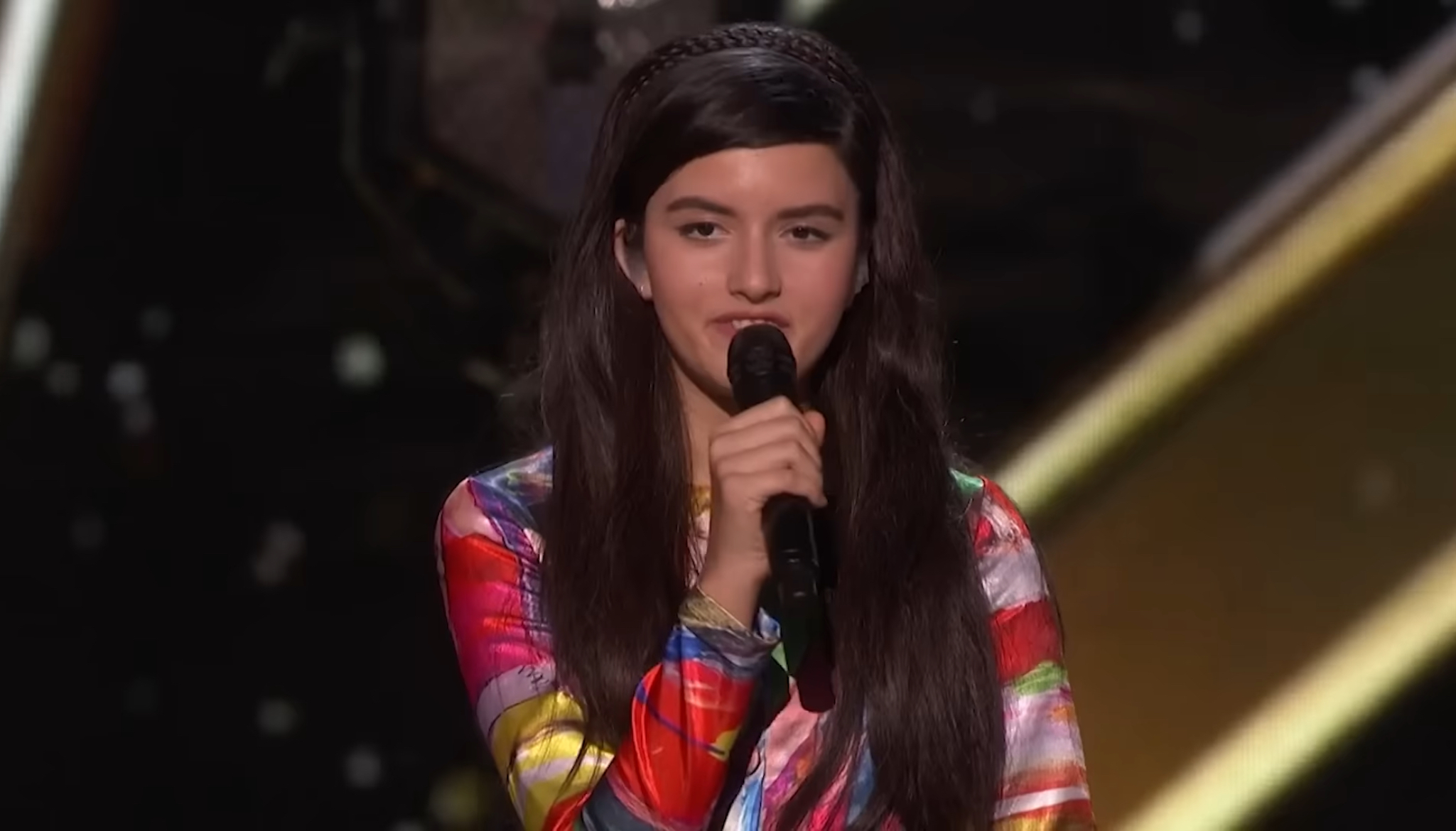
When Angelina Jordan, a 13-year-old singer from Oslo, stepped onto the America’s Got Talent: The Champions stage, you could feel the weight of expectation mixed with a strange kind of ease. Her backstory was already the stuff of small legend: she had won Norway’s Got Talent at seven, a child who sang jazz standards with an old‑soul confidence that made viewers half a world away stop and listen. That early victory wasn’t a fluke — it was the opening chapter of a life spent inside music. Growing up, Angelina’s bedroom playlists were full of Billie Holiday and Ella Fitzgerald; her parents would tell you she’d hum torch songs long before she understood the words. So when she admitted that her biggest dream had been to sing for Simon Cowell, it wasn’t braggadocio but a long‑held wish finally coming true after a decade of practice, small stages, and steady growth.
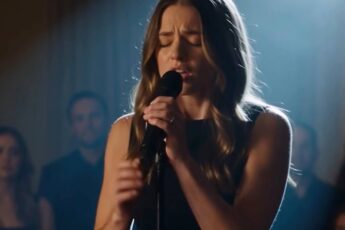
There was something quietly dramatic about the way she presented herself that night. She didn’t come on in sequins or with a choreographed entrance. Barefoot and simply dressed, she looked like someone who had wandered in from a late‑night jazz club rather than a televised talent war. That choice mattered: it set a tone of sincerity, a deliberate stripping away of spectacle so the voice could do the speaking. And what a voice it was — deep, smoky, and impossibly mature for a teenager. It wasn’t just about range or control; it was about tone, phrasing, and the ability to inhabit a lyric as if it had been penned for her own life.
Then there was the song choice, which might have seemed reckless to anyone hoping to play it safe. Angelina picked Queen’s “Bohemian Rhapsody,” a piece of music that has been dissected, adored, and parodied for decades — a song some consider untouchable. Rather than trying to replicate Freddie Mercury’s operatic bravado or the bombast of the original recording, she did something far braver: she reimagined it. In place of thunderous guitars and multi‑tracking, she rendered the song as a moody, jazz‑inflected ballad. The result was a version that felt less like a cover and more like a transformation.
As she moved through the song, the arrangement unfolded like a new story. Where Queen had built theatrical peaks and sudden genre shifts, Angelina let the melody breathe. Sparse piano chords replaced orchestral swells; a brushed snare kept time like a heartbeat. When she sang the opening lines, there was an immediate hush — not just because the stage had gone quiet, but because everyone in the room seemed to be recalibrating their expectations. She stretched phrases, softened consonants, and allowed silences to loom, turning familiar lines into intimate confessions. That breathing room revealed the emotional core of the lyric in ways the original hadn’t emphasized — the guilt, confusion, and quiet resignation came forward like a confession given in the dark.
Small, human moments made the performance feel alive. Midway through, she tilted her head as if listening to an internal rhythm, eyes closing for a beat before reengaging with the audience. A subtle rasp in her voice on the bridge hinted at the long rehearsals, late nights, and perhaps an understanding of heartbreak beyond her years. It wasn’t contrived; it was earned. The musicians on stage followed her lead, pulling textures back and pushing them forward in sympathy with her dynamics. There was an organic give and take, as if a small combo were accompanying a vocalist in a smoky room rather than a contestant on a national television show.
The judges’ reactions told part of the story in real time. Alesha Dixon was visibly floored, calling the arrangement “insane” and saying she felt like she was watching something rare being born. Howie Mandel, characteristically blunt, admitted he’d never heard the song like that before and was thoroughly impressed by the audacity and taste of the rendition. Their comments weren’t just polite TV kudos — they felt like honest attempts to process an unexpected artistic risk that had paid off.
Heidi Klum’s response crystallized the moment. She was moved in a way that went beyond the usual praise. Without hesitation, she hit the Golden Buzzer, an act that signaled more than advancement in a competition: it was a recognition of potential and a vote of faith. Hitting that buzzer sent Angelina straight to the finals, and for those sitting in the audience or watching at home, it felt like the right, inevitable outcome. The room erupted not simply because a talented kid had delivered a flawless cover, but because she had offered an interpretation that was deeply personal and utterly singular.
Angelina’s performance was more than a clever arrangement; it was a demonstration of artistic vision. She took an iconic work and, with quiet courage, reframed it through the language of jazz and soul. In doing so, she didn’t diminish the original — she illuminated a different set of emotions within it. For a young singer whose earliest public triumph came at seven, this moment on AGT: The Champions felt like a second coming‑of‑age: proof that talent, when paired with taste and bravery, can turn a familiar song into something startlingly new.