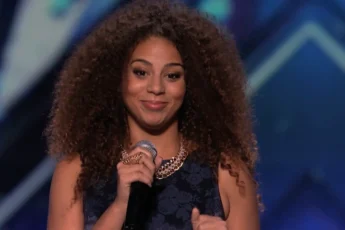
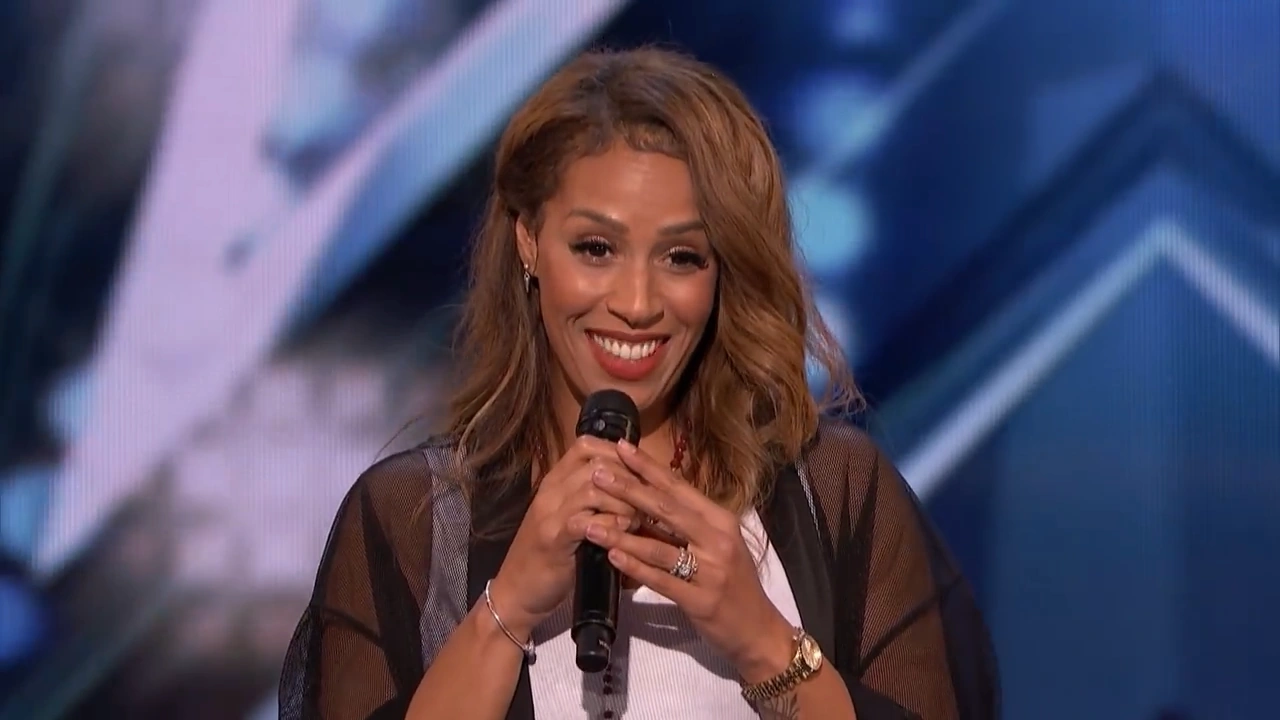
When Glennis Grace walked onto the America’s Got Talent stage, there was an air of quiet determination about her. At thirty-nine, she was no stranger to performing; years of shows and studio time had honed her craft. Yet she spoke candidly about a familiar dream — to sing for bigger audiences, to stretch her reach beyond the places she’d already been. That dream was not a solitary one: her eleven-year-old son Anthony had become something of a champion for her ambitions, a steady source of encouragement who urged her to take the leap onto this massive American platform. The image of a mother and son dreaming together made her story instantly relatable, and it framed the performance to come in a way that felt both personal and urgent.
There was an immediate curiosity in the room. The judges and the crowd were intrigued by an established artist who seemed to be using AGT not as a springboard but as a stage to finally step fully into the spotlight she deserved. The expectation was clear: this wasn’t about a flashy audition gimmick. Glennis would have to show that she possessed not just raw talent, but the kind of star quality that transcends good arrangements and warm reviews — the kind of presence that makes people stop talking and simply listen.
She chose a challenging and iconic song: “Run to You,” a Whitney Houston classic known for its wide range and emotional intensity. From the opening line, it was apparent that Glennis had fully absorbed the song’s architecture — the phrasing, the rise and fall, the emotional crescendos — and made those elements her own. Her vocal tone echoed Whitney in a way that was striking but never felt like imitation. Instead, it read as homage: a singer honoring an influence while bringing her own life and soul to the performance. The first notes landed with a clarity that filled the theater, and you could feel the audience leaning in, as if sensing they were about to witness something rare.
Technically, the performance was impeccable. Glennis navigated the song’s demanding runs and high notes with impressive control, her voice flexible and strong, never losing its warmth. At quiet moments she tapped into a husky intimacy that made the lyric feel conversational; at bigger moments she unleashed a power that sent vibrations through the auditorium. Those dynamic contrasts — the soft confidences and the explosive declarations — made the performance feel alive and emotionally honest. It wasn’t just about hitting notes; it was about shaping a story with each breath.
Small details amplified the effect. A steadying breath before a key phrase, a slight tilt of the head as she softened a line, the way she would close her eyes briefly as if communing with the memory of the music — these gestures humanized a technically masterful show. The stage lights would catch the glint in her eye during the climactic passages, and you could almost see the years of late-night rehearsals and the maternal assurances to Anthony reflected there. Those tiny, lived-in moments made the audience feel like they were being invited into a memory, not merely watching a performance.
As the song reached its peak, the auditorium shifted into something close to hushed reverence. People stood, not out of obligation but because the sheer emotional momentum made it natural to rise. The standing ovation that followed felt earned: a collective recognition that Glennis had done more than sing well—she had connected. That connection was mirrored on the judges’ panel, where reactions ranged from stunned silence to visible emotion.
Simon Cowell, who is often the most unsparing critic in the room, was struck enough to lay aside his usual reserve. “I feel like I’m looking at a star already,” he said, the kind of comment that confirmed the performance’s gravity. For Simon to declare someone a star is to acknowledge potential for a career far beyond a single show; it is rare and weighty praise. Mel B’s reaction was equally impactful but came from a place of personal recognition. “You do sound so much actually like Whitney, it’s unbelievable,” she said, a compliment that underscored just how faithful Glennis’s interpretation felt to the spirit of the original while still owning its space. Howie Mandel captured the essence of what everyone in the room had sensed when he observed that the only reason Glennis hadn’t been a global star yet was visibility — they simply hadn’t seen or heard her in the right moment.
When the votes were cast, all four judges said yes, a unanimous affirmation that felt like the natural conclusion to the performance’s momentum. For Glennis, the yeses were more than a ticket to the next round; they were validation of a lifelong pursuit and a nod to Anthony, who had believed in his mother enough to push her forward. Walking off the stage, she carried with her the rare combination of technical mastery and emotional authenticity that can convert a talented singer into a true star. In that moment, it seemed less like a competition and more like destiny finally meeting preparation — a reminder that sometimes, everything aligns and a voice that’s been polished through years of work gets the audience it deserves.