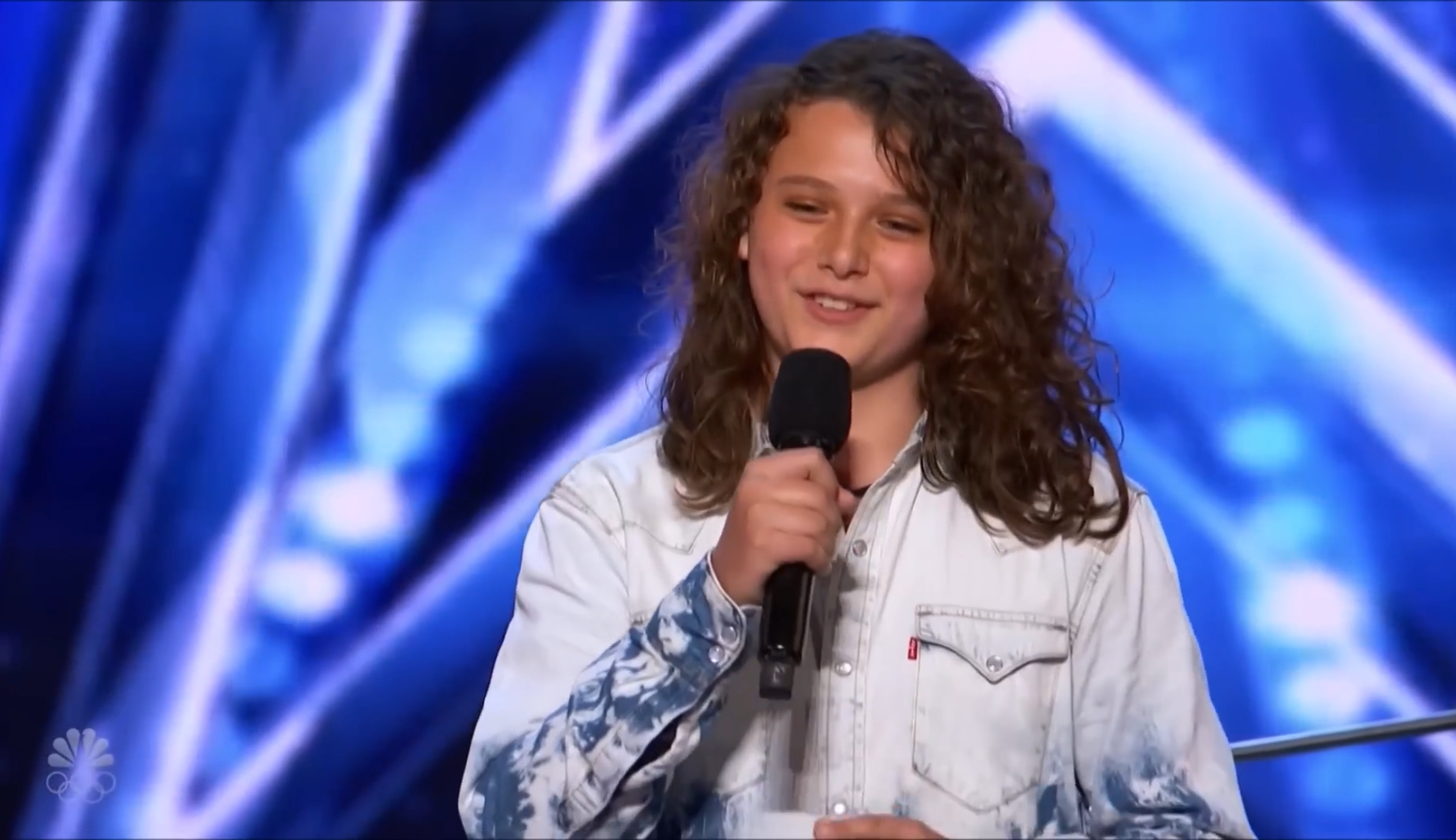
Fourteen-year-old Dylan Zangwill from Exton, Pennsylvania walked onto the America’s Got Talent stage with the sort of unassuming calm that makes you lean in to listen. He admitted to the judges in a soft voice that, although people at school knew he was a musician, he wasn’t “a big fan of talking about myself.” He seemed more comfortable at the piano than in the spotlight. That modest, almost shy framing made his choice of song feel like a dare: a classic blues-rock number that required grit, attitude, and vocal depth far beyond what many teens could muster. The contrast between his humble introduction and the song he was about to tackle set the audience on edge in the best possible way — everyone was waiting to see if the kid could back up his bold musical pick.
When Dylan put his hands on the keys and launched into the opening chords, the theatre seemed to hold its breath. There was an immediacy to his playing; the piano wasn’t merely accompaniment, it was an extension of him. He pushed through the intro with confident, rhythmic chord changes, fingers landing with a percussionist’s precision, then slid into the verse with a tastefully ragged edge. And then he sang. The shift was electric. The boy who had barely said two sentences minutes earlier became a force of nature at the microphone. His voice was raw and rich, a gravelly tenor that carried a heaviness and soul unusual for someone so young. Lines meant to be sung with the weight of lived experience were delivered with believable intensity, as if he had lived through every heartbreak the lyrics described.
His performance wasn’t just about vocal power; it was about conviction. He punched the harder phrases with a throatier edge and softened the quieter moments to add dramatic contrast. When the chorus hit, he filled the room with tone and volume, yet he never lost control. The piano playing matched his vocal choices, alternating between punchy, syncopated chords and melodic lines that underscored the song’s bluesy soul. There were flourishes and fills that implied a seasoned player—turns in the right spots, tasteful left-hand runs, and a sense of timing that let the music breathe. Watching him was like witnessing a quiet metamorphosis: nerves giving way to a commanding presence that seemed utterly at home on stage.
The audience response was immediate and visceral. People rose to their feet, not in obligatory applause but because they were caught off guard by the sheer authenticity of what they’d just heard. Heads turned, mouths opened, and a ripple of astonished cheering ran through the crowd. You could see parents wiping their eyes, teenagers nudging each other in disbelief, and a few people simply smiling as if they’d witnessed something rare and true. That kind of reaction doesn’t come from a polished studio performance; it comes from the raw alignment of talent, emotion, and bravery.
The judges’ faces told much of the story. Sofia Vergara was effusive, calling the audition “spectacular” and marveling at the sudden transformation from “sweet boy” to rock powerhouse. Her surprise felt genuine; she hadn’t expected such an abrupt pivot in persona and tone. Simon Cowell, typically guarded with praise, let himself enjoy the moment, describing it as “a great audition” and remarking that Dylan was “definitely something to watch.” His words carried weight; when Simon singles someone out, the industry takes notice. Heidi Klum added another dimension to the praise by pointing out that Dylan writes his own songs, an observation that suggested his artistry wasn’t merely interpretive but generative. That hint of songwriting talent opened even more doors in the judges’ eyes: here was someone who could not only perform but create.
Beyond the technicalities, the panel seemed moved by Dylan’s sincerity. There was no affected swagger, no contrived persona—just a teenager who used music to speak when words wouldn’t do. His passion felt contagious; it was easy to imagine him hunched over a piano at home late at night, scribbling lyrics into a notebook, or playing in a garage with friends until the sun came up. That image made his stage transformation feel earned rather than manufactured.
When the voting came, unanimity was almost inevitable. Each judge hit their red button, delivering four emphatic “Yes” votes that sealed his passage to the next round. The verdict felt less like a judgment and more like an embrace: the industry and the audience acknowledging raw talent and potential. For Dylan, it was a life-affirming moment — the validation that his voice mattered and that he could stand in front of people and communicate something true. As he left the stage, the applause followed him like a promise, and you could imagine him returning to Exton with a new spark in his step, knowing that the shy kid who “wasn’t big on talking” had just said something loud and unforgettable through music.