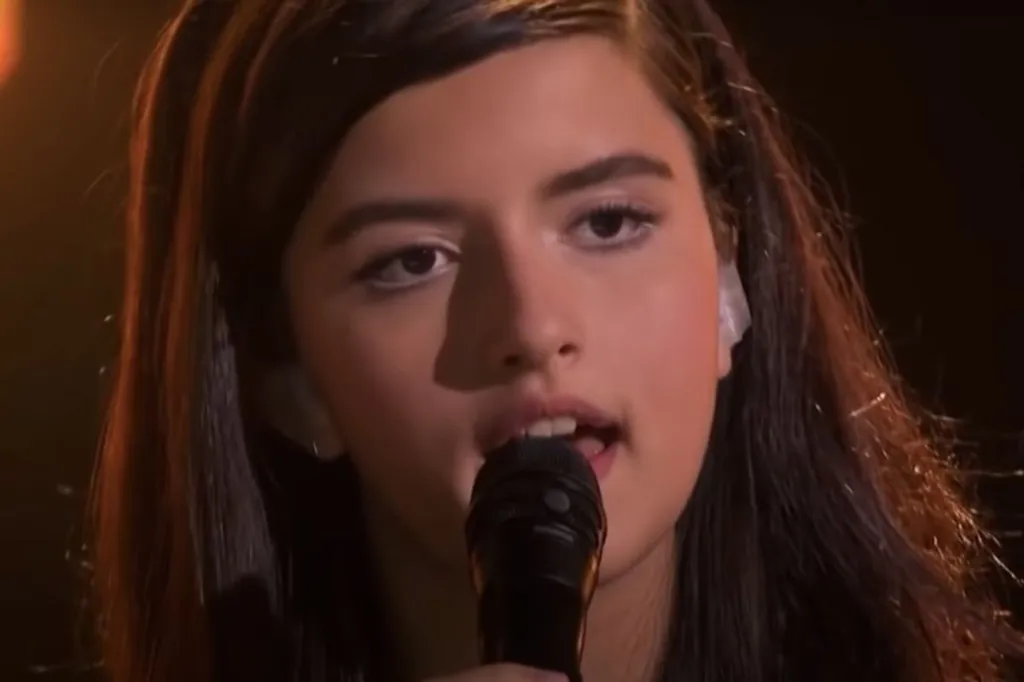
Talent shows are built on surprises, but every so often a young performer steps onto the stage and changes the whole energy of the room. That’s exactly what happened the night a 13-year-old contestant decided to take on Queen’s “Bohemian Rhapsody” — not by imitating Freddie Mercury, but by reimagining the song in a way that felt entirely their own. From the moment they walked out, you could tell this wouldn’t be a run-of-the-mill cover. There was a quiet confidence in their posture, a small grin as they met the judges’ eyes, and an obvious readiness to take a big risk.
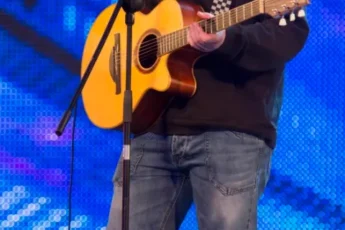
When the opening notes began, the audience leaned in. Instead of trying to replicate the original’s operatic swagger and bombastic climax, the young singer stripped parts of the arrangement back and introduced unexpected textures: delicate fingerpicked guitar under the verses, breathy harmonies layered like a soft tapestry, and a rhythmic twist that turned the familiar melody into something contemporary and intimate. It was a brave choice — the song is practically sacred to many listeners — but the reinterpretation allowed the teenager’s voice and personality to shine through rather than disappear beneath an imitation.
What made the performance especially compelling was the way the singer balanced respect for the source material with inventive choices. They kept the emotional spine of the song intact — the sense of confession and turmoil that runs through the lyrics — but presented it through fresh dynamics. During the quieter parts, the voice hovered with fragile clarity, revealing vulnerability that felt very real. Then, when the arrangement called for drama, they didn’t try to recreate Freddie’s thunderous power; instead they leaned into controlled intensity, using phrasing and timing to create crescendos that felt earned. Those moments were as satisfying as any huge belted note because they were true to the performer’s instrument and age.
The judges’ faces told part of the story. At first there was something like polite curiosity, the kind of expression professionals wear when evaluating any audition. But as the piece unfolded, surprise replaced neutrality. One judge closed their eyes, the corners of their mouth lifting in appreciation. Another sat forward, elbows on the table, visibly impressed by the ingenuity on display. You could see the instant recalibration: this was not just another talented kid; this was a young artist with vision. The audience mirrored that response. Where you might expect polite applause for a neat job, the room reacted with audible excitement — appreciative gasps, bursts of cheering, a few standing ovations even before the final run was complete.
Small details made the performance feel authentic and memorable. The singer used subtle changes in tempo to underscore certain lines, letting a phrase hang for a beat so listeners could absorb the emotion. They added a soft, almost whispered harmony in one verse that caught people’s attention because it was fragile and unexpected. Their body language was similarly effective: instead of grand gestures, they used minimal movement — a step forward, a tilt of the head, a closed-eyed moment of concentration — which made the emotional peaks land harder because they weren’t distracted by theatrics. Even the look they wore — simple stage clothes rather than a flashy costume — reinforced the sense that this was an artist-focused performance, not a staged spectacle.
There’s also something invigorating about seeing youth approach a classic with boldness. Adults often feel the urge to preserve iconic songs exactly as they remember them, but younger performers can afford to experiment without the burden of nostalgia. This teenager’s version of “Bohemian Rhapsody” felt like a bridge: it honored the original while making room for a new generation’s sensibilities. That willingness to reinterpret a beloved track takes courage — especially on a televised platform where comparisons are immediate and sometimes harsh. Yet the risk paid off because the performer trusted their instincts and didn’t try to be someone they weren’t.
By the end of the performance, the room had shifted from polite curiosity to full-on celebration. The final notes were met with sustained applause, cries of “Wow!” and a ripple of cheers that made clear the audience had been thoroughly won over. Viewers at home would later replay clips of the audition, sharing the unique arrangement and marveling at the talent and bravery of someone so young. For the judges, the performance wasn’t just about technical skill; it was about presence, interpretation, and the ability to connect.
Moments like this are why people keep watching talent shows. They remind you that age doesn’t limit artistic depth and that a fresh take on a classic can reveal something new about both the song and the performer. When a 13-year-old takes a huge risk, makes it theirs, and leaves the audience buzzing, it’s a reminder that talent isn’t just about hitting the right notes — it’s about having the courage to reshape what those notes can mean.